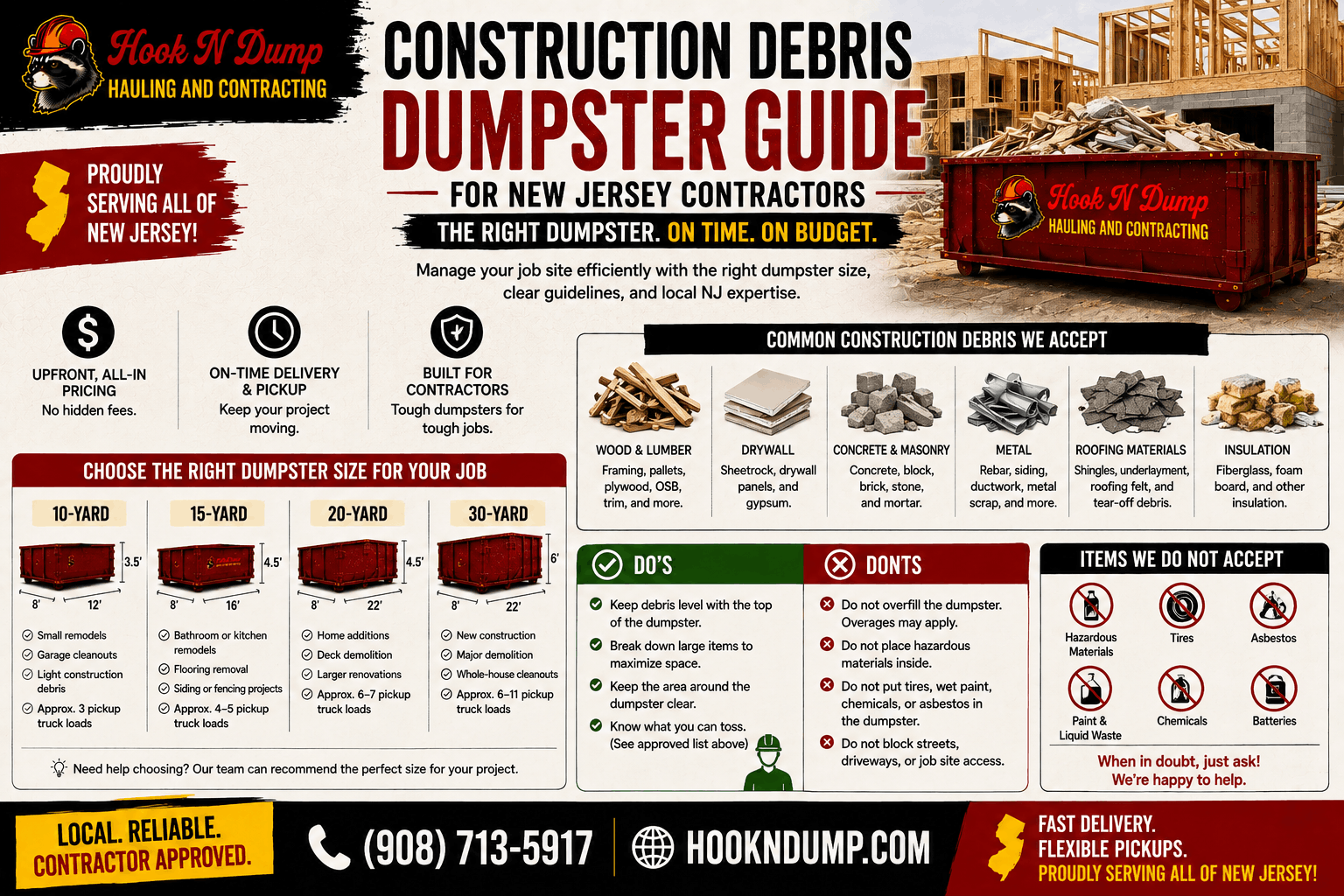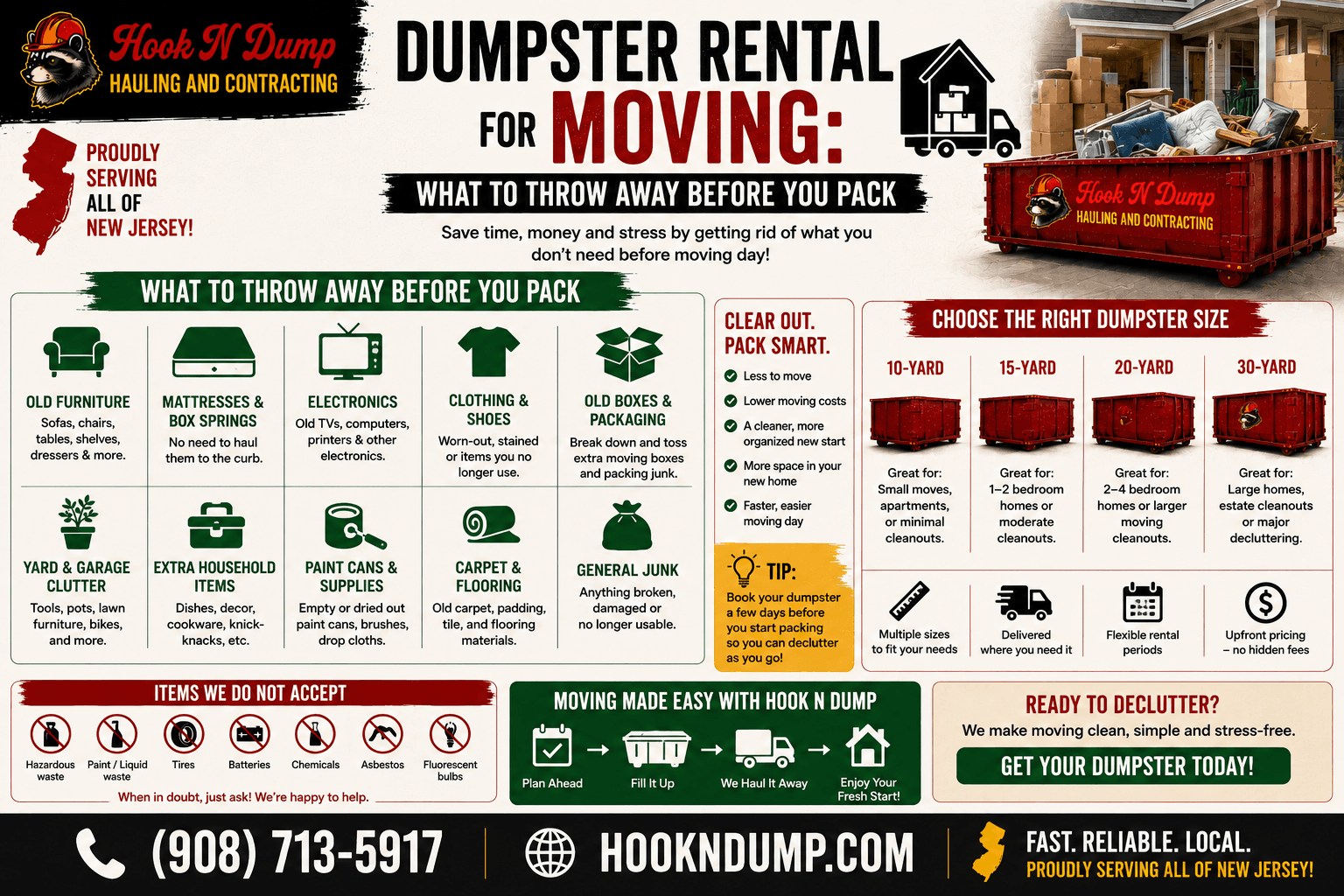
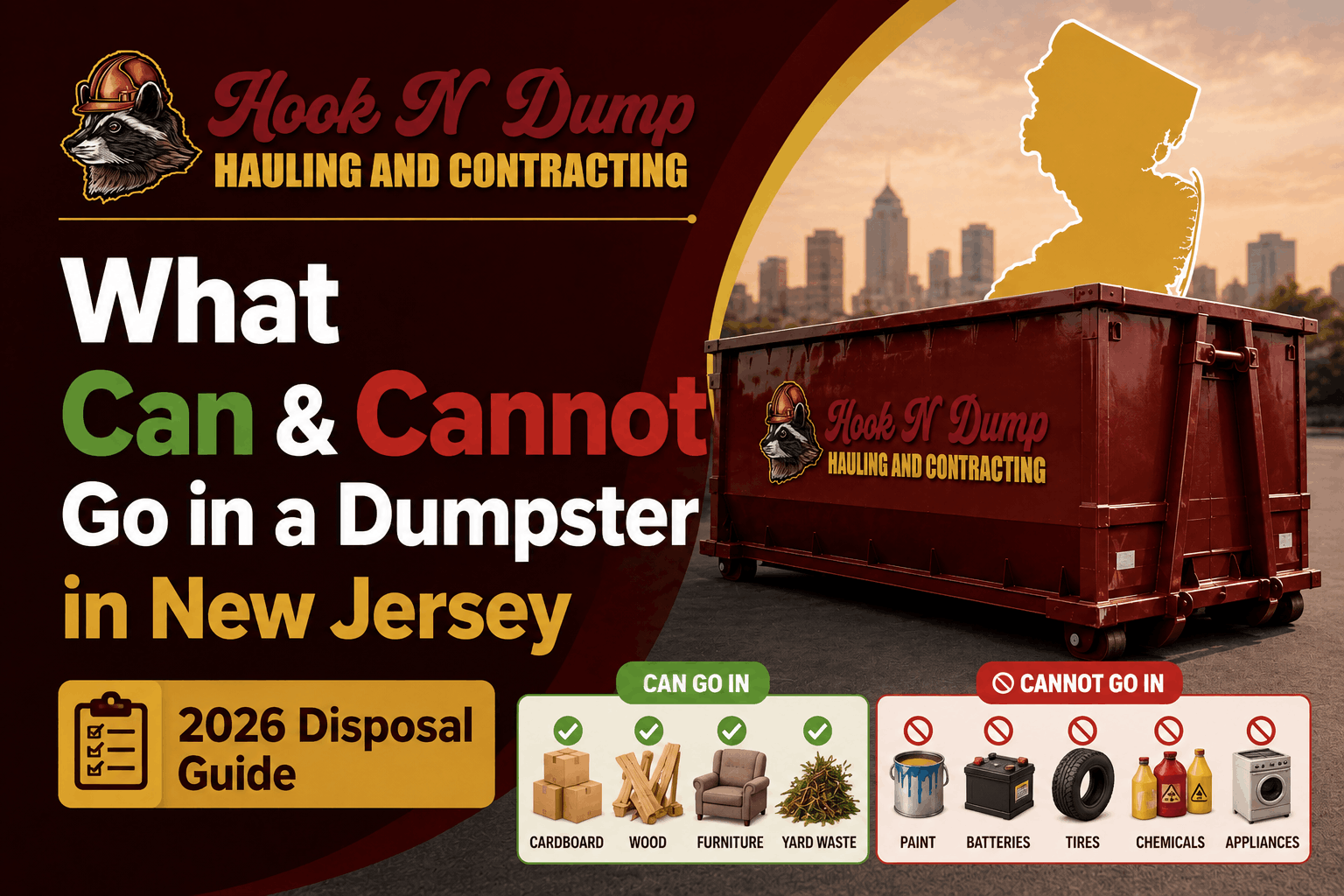
Renting a roll-off dumpster can make a home cleanout, renovation, roofing job, landscaping project, or construction cleanup much easier. However, not every type of waste can be placed in the same container.
In New Jersey, ordinary household junk and many types of construction debris can usually go into a dumpster. Hazardous chemicals, liquid paint, asbestos, medical waste, fuel, propane tanks, and several types of electronics require separate handling.
Some items are not completely prohibited but may need advance approval, a separate container, or an additional disposal fee.
This guide explains what you can put in a Hook N Dump container, what you should ask about before loading, and what must be taken to another disposal or recycling program.
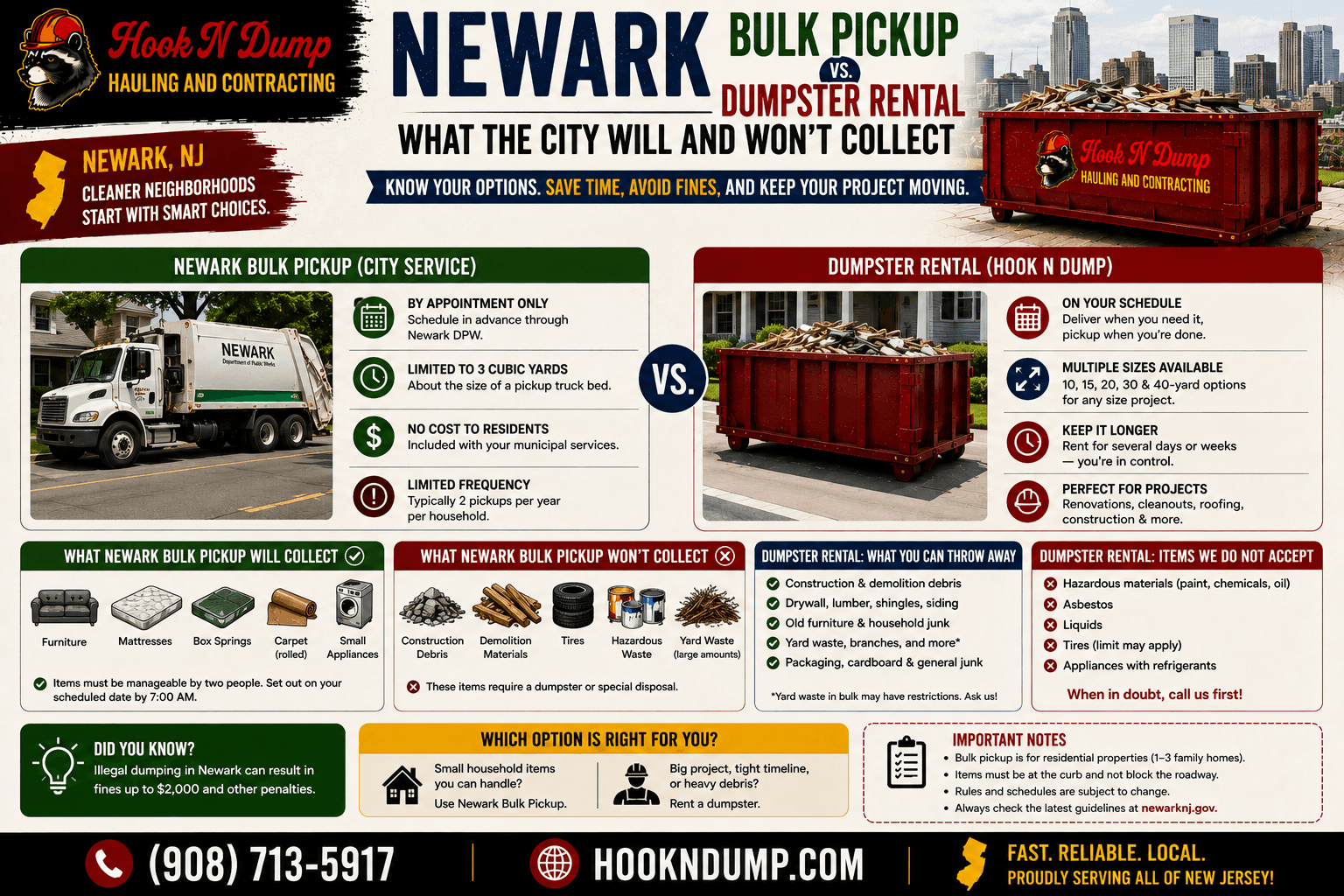
Quick answer: Household furniture, boxes, nonhazardous junk, wood, drywall, flooring, roofing materials, doors, windows, and many forms of yard debris are normally accepted. Paint, hazardous chemicals, asbestos, propane tanks, fuel, medical waste, and flammable liquids should not be loaded. Mattresses, tires, televisions, monitors, refrigerant-containing appliances, and dense materials may require separate handling or additional fees. Hook N Dump lists these three material groups across its New Jersey service pages.
Quick New Jersey Dumpster Disposal Chart
| Material | Standard Dumpster? | What to Do |
|---|---|---|
| Household furniture | Usually accepted | Break large pieces down when possible. |
| Boxes and household clutter | Usually accepted | Flatten boxes to save space. |
| Wood and lumber | Usually accepted | Remove protruding nails where practical. |
| Drywall and plaster | Usually accepted | Keep within the weight allowance. |
| Flooring and carpet | Usually accepted | Roll or cut material into smaller sections. |
| Roofing shingles | Usually accepted | Tell Hook N Dump the estimated amount. |
| Doors and windows | Usually accepted | Protect exposed or broken glass. |
| Yard debris | Usually accepted | Confirm whether it can be mixed with other waste. |
| Mattresses and box springs | Call first | Additional handling fees may apply. |
| Refrigerators and air conditioners | Call first | Refrigerant must be handled correctly. |
| Televisions and monitors | Separate handling | New Jersey requires covered electronics to be recycled. |
| Tires | Call first | Separate recycling or an additional fee may apply. |
| Concrete, brick and block | Call first | A dedicated heavy-material container may be needed. |
| Dirt and soil | Call first | Approval depends on the material and contamination risk. |
| Batteries | Do not load without approval | Use an approved battery recycling program. |
| Wet paint and solvents | Do not load | Use a paint or household hazardous waste program. |
| Propane tanks | Do not load | Take to an approved cylinder disposal location. |
| Gasoline, fuel and motor oil | Do not load | Use a hazardous-waste or used-oil program. |
| Asbestos-containing material | Do not load | Contact a licensed asbestos professional. |
| Medical waste and loose needles | Do not load | Use an approved medical-waste or sharps program. |
Acceptance can vary based on the disposal facility, municipality, material condition, quantity, and whether the load contains mixed waste. Contact Hook N Dump before loading anything that is not clearly listed as standard debris.
What Can Usually Go in a Dumpster?
Household Junk and General Cleanout Debris
Most nonhazardous household materials can normally be placed in a roll-off dumpster.
Examples include:
- Tables
- Chairs
- Sofas
- Cabinets
- Shelving
- Clothing
- Toys
- Books
- Cardboard boxes
- Nonhazardous household clutter
- Empty storage containers
- Small household furnishings
- Broken non-electronic items
Furniture and household junk are listed among the accepted materials on Hook N Dump’s North Jersey, Central New Jersey, and county service pages.
Break down large items when possible. A dismantled table, shelving unit, or cabinet takes up less room and leaves more capacity for the rest of the cleanup.
Do not leave furniture or debris extending above the top edge of the container. The load should remain level enough for safe pickup and transport.
Construction and Remodeling Debris
Many common building materials can go into a construction debris dumpster.
Accepted materials may include:
- Untreated wood
- Lumber
- Drywall
- Wallboard
- Plaster
- Flooring
- Carpet and padding
- Roofing materials
- Doors
- Windows
- Non-asbestos insulation
- Plastic construction scrap
- Metal
- Broken cabinets
- Renovation debris
New Jersey classifies waste from construction, remodeling, repair, and demolition work as construction and demolition waste. The state’s definition includes wood, concrete, asphalt, brick, wallboard, roofing materials, carpet, metal, glass, plastic, dirt, and other building debris, though some materials require separate processing.
Before ordering, explain the project to Hook N Dump. A bathroom remodel, roofing job, deck removal, and full-building demolition can produce very different debris weights.
Roofing Shingles
Roofing shingles are normally accepted, but they are heavier than many customers expect.
Tell the rental company:
- The approximate number of roof squares
- Whether the roof has one or several shingle layers
- Whether the load will include plywood
- Whether flashing, gutters, or other metal will be included
- The size and type of building
Even when a dumpster has enough physical space, the shingles may reach its weight allowance before the container is full.
Flooring Material
Many flooring materials can normally be loaded, including:
- Carpet
- Carpet padding
- Hardwood
- Laminate
- Vinyl flooring
- Ceramic tile
- Subfloor materials
Tile, mortar, and some older flooring can be very heavy. Older flooring may also contain asbestos or asbestos-containing adhesive. Stop work and arrange professional testing when asbestos is suspected rather than placing the material into an ordinary dumpster.
Yard Waste and Landscaping Debris
Hook N Dump lists yard waste among the accepted materials on its current New Jersey service pages.
Examples may include:
- Branches
- Brush
- Leaves
- Small tree parts
- Grass and garden debris
- Noncontaminated landscaping waste
New Jersey treats brush, tree parts, grass, leaves, and stumps as separate recyclable-material categories. A disposal facility may require clean yard waste to be separated from household or construction debris.
Ask these questions before loading:
- Can yard waste be mixed with household junk?
- Are stumps accepted?
- Is there a limit on branch length or diameter?
- Can soil or sod be included?
- Does the facility require a yard-waste-only load?
Scrap Metal
Metal fixtures, shelving, pipes, frames, and similar nonhazardous materials may be accepted. However, recycling clean metal separately can sometimes leave more dumpster capacity for nonrecyclable debris.
Items with fuel, chemicals, oil, refrigerant, mercury, or pressurized components need separate handling.
Items That Require Approval or May Cost Extra
Some materials cannot be treated as ordinary mixed debris. Contact Hook N Dump before placing any of the following items in the container.
Mattresses and Box Springs
Mattresses and box springs may require an additional handling or disposal fee. Hook N Dump lists both as extra-fee items on several service-area pages.
Tell the company how many mattresses or box springs you plan to remove before delivery. Do not hide them underneath other materials.
Refrigerators, Freezers and Air Conditioners
Appliances that may contain refrigerant include:
- Refrigerators
- Freezers
- Window air conditioners
- Dehumidifiers
- Some water coolers
These items may require refrigerant recovery or separate processing before recycling or disposal. Hook N Dump identifies appliances containing Freon as items that may carry an additional fee.
Standard appliances such as washers or dryers may also need advance approval based on the disposal facility.
Tires
Tires should not be loaded without permission.
New Jersey categorizes tires as a recyclable material that must be handled at an approved Class B recycling facility. Hook N Dump also lists tires among materials that may require an additional fee.
When requesting a quote, provide:
- Number of tires
- Passenger or truck tire type
- Whether rims are attached
- Whether the tires are clean or contaminated
Televisions, Monitors and Other Electronics
Do not assume that a television, computer, or monitor can go into ordinary mixed waste.
New Jersey’s Electronic Waste Management Act keeps covered electronic devices out of the regular waste stream. Covered items include televisions, desktop and portable computers, monitors, desktop printers, and desktop fax machines. The NJDEP maintains a current list of collection locations, mail-back programs, and some home-pickup options.
Hook N Dump lists televisions and monitors as materials that may need separate handling or additional fees. Call before loading any electronic device.
Concrete, Brick, Block and Asphalt
Concrete, asphalt, brick, and block are dense Class B recyclable materials in New Jersey. They can become too heavy for a standard mixed-debris container even when the dumpster looks only partly full.
Heavy-material projects may require:
- A smaller dumpster
- A strict fill line
- A clean load containing one material type
- No household junk mixed into the load
- A different price or weight allowance
- Approval before delivery
Never fill a large dumpster completely with concrete or soil unless the rental company has given you written loading instructions.
Dirt and Soil
Clean soil may require a different disposal or recycling route from ordinary waste. Soil contaminated by petroleum, chemicals, asbestos, lead, or another substance cannot be handled as ordinary clean fill.
Tell Hook N Dump:
- Where the soil came from
- Whether there was an oil tank, spill, or industrial use
- Whether laboratory testing has been completed
- Whether the load contains sod, roots, concrete, or rock
Do not mix unknown or contaminated soil into a standard dumpster.
What Cannot Go in a Hook N Dump Dumpster?
Hazardous Chemicals
Do not load products that are toxic, corrosive, reactive, or otherwise hazardous.
Examples include:
- Pesticides
- Pool chemicals
- Strong cleaning chemicals
- Industrial chemicals
- Solvents
- Thinners
- Adhesives containing hazardous ingredients
- Unknown chemical containers
New Jersey counties and municipalities may run household hazardous waste collection events for residents. NJDEP recycling programs also direct universal waste such as batteries, pesticides, electronics, mercury-containing equipment, aerosol cans, oil-based finishes, and used oil into specialized recycling channels.
Keep every chemical in its original labeled container until you confirm the correct disposal method.
Paint, Stain, Lacquer and Solvents
Hook N Dump identifies paint and solvents as prohibited materials on its service-area pages.
Do not place the following in the dumpster:
- Liquid latex paint
- Oil-based paint
- Stain
- Varnish
- Lacquer
- Paint thinner
- Solvents
- Open or leaking paint cans
New Jersey regulates oil-based finishes under its universal-waste framework, and the state’s recycling directory includes options for latex and oil-based paints.
Contact your county household hazardous waste program or an approved paint-collection location.
Fuel, Oil and Flammable Liquids
Do not load:
- Gasoline
- Diesel fuel
- Kerosene
- Motor oil
- Antifreeze
- Brake fluid
- Flammable cleaners
- Oil-contaminated containers
- Fuel-contaminated rags in unsafe quantities
NJDEP identifies used motor oil and antifreeze as materials that should be processed through separate recycling or waste-management channels.
Propane Tanks and Pressurized Cylinders
Propane cylinders, oxygen tanks, fire extinguishers, and other pressurized containers can create fire or explosion risks during loading, compaction, transportation, or processing.
Hook N Dump lists propane tanks as prohibited on its current location and county pages.
Contact a propane supplier, approved scrap facility, fire-extinguisher service company, or household hazardous waste program.
Batteries
Do not place loose automotive, rechargeable, lithium-ion, button-cell, or damaged batteries into a mixed dumpster.
New Jersey separates automotive and consumer batteries into dedicated recyclable-material categories. The state also lists batteries under Class D universal waste processing.
Lithium batteries can be hidden in:
- Power tools
- Laptops
- Phones
- E-bikes
- Toys
- Vacuums
- Small appliances
- Portable chargers
Remove batteries from discarded equipment when it is safe to do so and use an approved collection program.
Asbestos and Suspected Asbestos Materials
Do not place suspected asbestos into a standard dumpster without formal testing and an approved disposal plan.
Possible asbestos-containing materials include:
- Older vinyl floor tiles
- Pipe insulation
- Boiler insulation
- Certain roofing products
- Siding
- Textured coatings
- Adhesives
- Cement board
- Fireproofing material
NJDEP has separate packaging, transport, labeling, handling, and disposal requirements for regulated asbestos-containing material. The state recommends assessing transport and disposal responsibilities with a licensed asbestos contractor before the material is disturbed.
Medical Waste, Sharps and Needles
Do not place loose needles, syringes, lancets, blood-contaminated products, pathological waste, or other regulated medical waste into a roll-off dumpster.
New Jersey regulates several classes of medical waste, including sharps, blood products, pathological waste, isolation waste, and certain animal waste. NJDEP also publishes a separate disposal guide for home-generated syringes and lists participating disposal programs.
Contaminated or Unknown Materials
Do not load material when you do not know what it contains.
Examples include:
- Unmarked chemical drums
- Petroleum-contaminated soil
- Containers with unidentified liquid
- Fire-damaged chemical products
- Industrial process waste
- Material contaminated by a spill
- Suspected lead-abatement waste
- Suspected asbestos debris
Call before disturbing, mixing, or transporting unknown waste.
Can You Put Furniture in a Dumpster in New Jersey?
Yes, most ordinary household furniture can normally go into a Hook N Dump container.
Common examples include:
- Couches
- Chairs
- Tables
- Dressers
- Desks
- Cabinets
- Bookcases
- Bed frames
Mattresses and box springs should be declared before ordering because added fees may apply.
Break down large furniture where possible, remove glass panels, and keep every item below the top edge of the dumpster.
Can You Put Appliances in a Dumpster?
Some appliances may be accepted, but you should always ask first.
Washers, dryers, stoves, and similar appliances may be handled differently from refrigerators, freezers, air conditioners, and dehumidifiers. Appliances containing refrigerant usually require separate processing and may carry an additional charge.
Do not place an appliance in the container while it contains food, chemicals, oil, fuel, batteries, or pressurized components.
Can You Put Concrete or Dirt in a Dumpster?
Concrete, brick, block, asphalt, rock, and dirt may be accepted only under an approved heavy-material plan.
These materials should not be added to an ordinary mixed household load without permission. The rental company may specify a particular dumpster size, maximum fill line, or clean-load requirement.
Contact Hook N Dump with the estimated volume and material type before ordering.
Can You Put Paint in a Dumpster?
No. Do not place liquid paint, oil-based coatings, stains, lacquer, thinner, or solvents in a Hook N Dump container.
Use a county household hazardous waste program or approved paint-recycling location instead.
Can You Put a Television in a Dumpster?
Do not place a television into the dumpster without advance instructions.
Televisions and several other covered electronic devices must be recycled through approved New Jersey collection programs rather than discarded in the regular waste stream.
How to Avoid Extra Fees and Pickup Delays
Describe Every Material Before Ordering
Tell Hook N Dump:
- What project you are completing
- What materials you expect
- Whether the load includes heavy debris
- Whether you have mattresses, tires, appliances, or electronics
- How many days you need the container
- Whether debris will be mixed
A clear material list allows the team to recommend the proper dumpster and disposal route.
Do Not Hide Restricted Items
Do not cover televisions, tires, paint cans, appliances, or other restricted materials beneath household debris.
A disposal facility may inspect or reject a load containing unacceptable material. Separate handling may also increase disposal costs.
Keep Liquids Out
Drainage from paint, chemicals, oil, fuel, or unknown liquid can create contamination and transportation problems. Keep all liquids out of the dumpster unless Hook N Dump gives you written approval for a specific nonhazardous material.
Do Not Overload Heavy Materials
Concrete, shingles, plaster, tile, dirt, and masonry can exceed a container’s weight allowance quickly.
Follow the loading height provided by Hook N Dump, even when unused space remains above the material.
Ask Before Mixing Waste Types
A clean load of concrete or yard waste can be processed differently from mixed debris. Adding household trash, plastic bags, food, or furniture may change the entire load’s disposal category.
What Should You Do With Prohibited Items?
Use the following disposal routes:
- Paint and chemicals: County household hazardous waste program or approved paint location
- Televisions and computers: NJDEP-listed electronic waste collection site
- Automotive batteries: Battery retailer, auto-parts store, or approved recycler
- Rechargeable batteries: Participating battery collection program
- Tires: Approved tire retailer or recycling facility
- Refrigerant appliances: Municipal program, appliance recycler, or approved pickup service
- Propane tanks: Propane supplier or approved cylinder collection program
- Asbestos: Licensed asbestos contractor and approved disposal facility
- Sharps: Participating hospital or approved home-sharps program
NJDEP maintains statewide recycling categories, electronic-waste collection locations, waste-management guidance, and links to local collection programs.
Checklist Before Your Dumpster Arrives
Before delivery:
- Make a list of every material you plan to remove.
- Separate hazardous waste, paint, electronics, batteries, and pressurized tanks.
- Estimate the amount of concrete, soil, shingles, tile, or other heavy debris.
- Tell Hook N Dump about mattresses, tires, televisions, monitors, and refrigerant appliances.
- Confirm whether yard waste can be mixed with other debris.
- Check older building materials for possible asbestos.
- Clear a safe delivery area with enough width and overhead clearance.
- Keep all debris below the container’s top edge.
- Call before adding anything not discussed during ordering.
Hook N Dump advises customers to provide a clear opening at least 10 feet wide and at least 14 feet of overhead clearance for delivery. Its dumpsters range from approximately 12 to 16 feet in length.
Get the Right Dumpster for Your New Jersey Cleanup
The safest approach is simple: describe your project and materials before ordering.
Hook N Dump provides roll-off dumpster rentals for home cleanouts, remodeling, roofing, landscaping, construction, junk removal, and other cleanup projects throughout North and Central New Jersey.
Call (973) 477-6805 or request a quote online. The Hook N Dump team can help you choose the right size and confirm which materials can be accepted before your dumpster is delivered.
Reviewed by Hook N Dump
Disposal requirements and facility rules can change. Confirm all restricted or unusual materials before loading your dumpster.
FREQUENTLY ASKED QUESTIONS
Can I put furniture in a dumpster in New Jersey?
Most nonhazardous household furniture, including couches, tables, chairs, dressers, cabinets, and bed frames, can normally go into a Hook N Dump container. Mattresses and box springs may require an additional fee, so disclose them before ordering.
Can I put a mattress in a dumpster?
A mattress or box spring may be accepted for an additional handling or disposal charge. Contact Hook N Dump before loading it.
Can I put a television or computer in a dumpster?
Do not load televisions, computers, monitors, laptops, desktop printers, or desktop fax machines without approval. Covered electronic devices must be recycled through approved New Jersey collection programs.
Can I put paint in a dumpster?
No. Liquid paint, oil-based coatings, stains, solvents, lacquer, and paint thinner should not be placed in a Hook N Dump container. Use an approved paint or household hazardous waste program.
Can I put concrete, brick or dirt in a dumpster?
These materials may be accepted with advance approval. Heavy debris may require a dedicated dumpster, a lower fill limit, or a clean load containing only approved material.
Can I put a refrigerator or air conditioner in a dumpster?
Refrigerators, freezers, air conditioners, and other refrigerant-containing appliances require advance approval and may carry an additional fee because they need separate processing.
Can yard waste go in a dumpster?
Branches, brush, leaves, grass, and other landscaping debris may be accepted. Ask whether yard waste can be mixed with household or construction debris and whether stumps or soil are permitted.
What happens if I put a prohibited item in the dumpster?
The item may need to be removed before pickup, the load may require special handling, or additional charges may apply. Contact Hook N Dump immediately when a restricted item has been loaded accidentally.