Moving is easier when you do not pack items you already know you will never use again.
A dumpster rental gives you one place for broken furniture, damaged household items, worn carpet, empty storage containers and other approved waste while you sort your home. Instead of moving unwanted belongings to the next property, you can clear them out before packing begins.
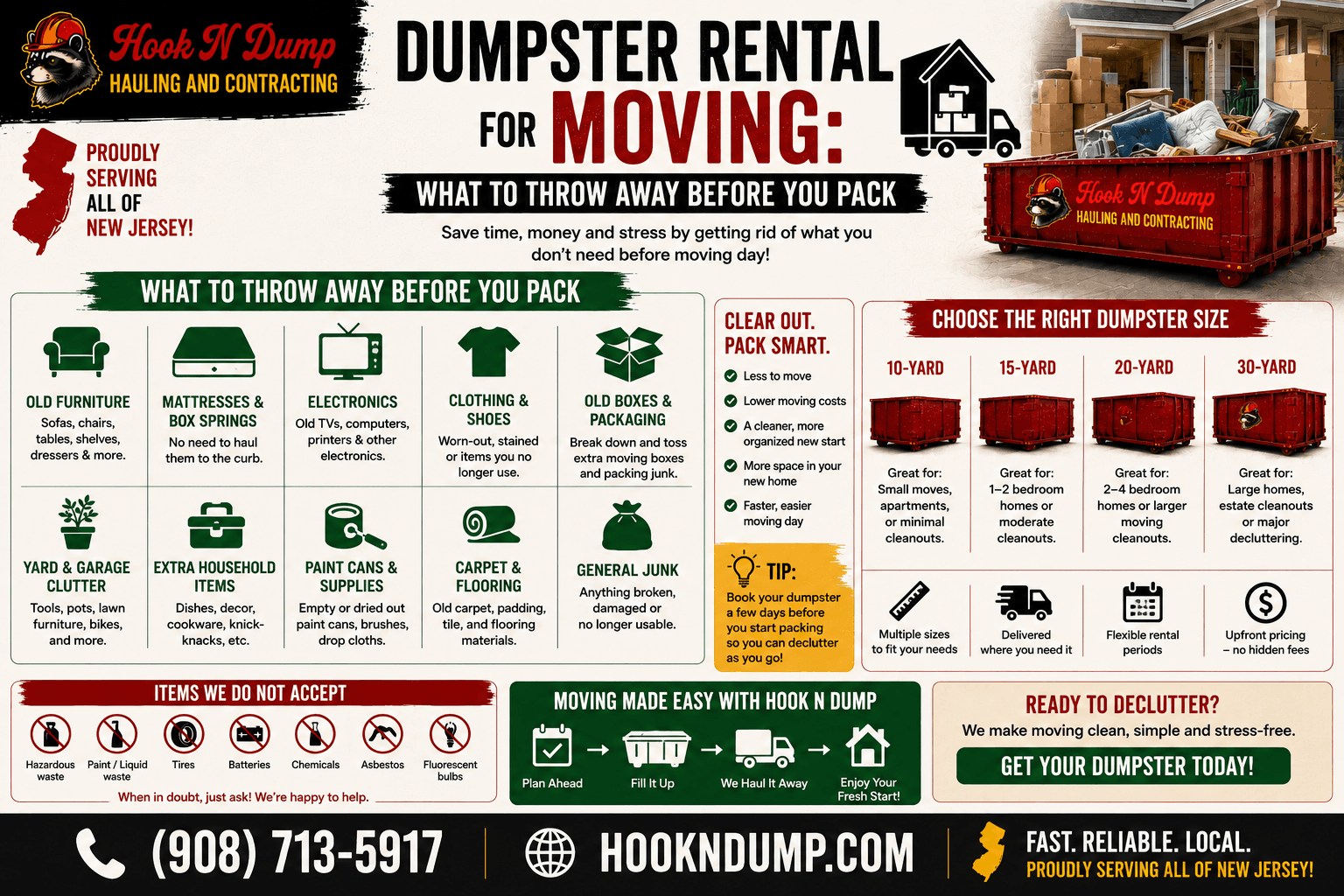
A 10-yard dumpster may be enough for a small apartment, one-room cleanout or light downsizing project. A 15-yard dumpster is often a good fit for several rooms, an apartment move-out or a garage and attic cleanup. A 20-yard dumpster is better suited to a full-house cleanout. A 30-yard container may be needed for a large furnished home, estate or property with years of stored belongings. Hook N Dump lists moving and downsizing as uses for its 10 and 15-yard containers, while its 20-yard dumpster is listed for full-house cleanouts and its 30-yard option for estate cleanouts.
Best starting point
- 10 yards: Small apartment, one or two rooms, or a light move-out purge
- 15 yards: Several rooms, apartment cleanout, garage, basement or attic
- 20 yards: Full-house move or major downsizing project
- 30 yards: Large furnished home, estate or several storage areas
- 40 yards: Very large estate, multi-unit property or unusually high debris volume
Moving Dumpster Size Comparison
| Dumpster Size | Current Starting Price | Included Weight | Approximate Pickup Loads | Suggested Moving Use |
|---|---|---|---|---|
| 10-yard | $475 | 3,000 lbs. | About 3 | Small apartment or light downsizing |
| 15-yard | $550 | 4,000 lbs. | About 4 to 5 | Several rooms or apartment move-out |
| 20-yard | $625 | 5,000 lbs. | About 6 | Full-house cleanout before moving |
| 30-yard | $725 | 7,000 lbs. | About 9 | Large home or estate cleanout |
| 40-yard | $875 | 9,000 lbs. | About 12 | Very large property or several units |
Hook N Dump’s current pricing page displays 3, 7 and 10-day rental choices, with additional time listed at $25 per day. Its individual container pages provide the approximate pickup-load comparisons.
Why Rent a Dumpster Before Moving?
Packing without decluttering creates extra work at every stage.
Items you do not need still have to be:
- Sorted
- Wrapped
- Boxed
- Labeled
- Carried
- Loaded into the moving truck
- Transported
- Unloaded
- Stored or discarded later
Removing unwanted belongings first can reduce the number of boxes, free space for packing and make the new home easier to organize.
A dumpster can also help keep the project orderly. Rather than building several debris piles in the garage or driveway, approved waste goes directly into one container.
Hook N Dump provides both self-loaded dumpsters and full-service home cleanouts for moving, downsizing, property sales and other large cleanups.
Use Five Sorting Categories
Do not treat every unwanted item as dumpster waste. Set up five areas before packing.
Choosing a dumpster that is too small may require a second rental or an additional pickup. Choosing one that is much larger than your project needs may mean paying for unused capacity.
The best choice is usually the smallest dumpster that can safely hold all your debris without being overloaded.
1. Keep and Pack
Keep items that:
- Are used regularly
- Fit the new property
- Are in good condition
- Have a clear purpose
- Carry real personal or family meaning
- Would be difficult or costly to replace
Label these items by room and pack them separately from the cleanup area.
2. Donate
Possible donation items include:
- Clean clothing
- Usable furniture
- Working household goods
- Books
- Toys
- Kitchenware
- Tools
- Sports equipment
- Unopened household supplies
Check the organization’s current acceptance rules before transporting or scheduling a pickup.
3. Sell
Selling may make sense for:
- Furniture in good condition
- Working appliances
- Collectibles
- Tools
- Exercise equipment
- Electronics
- Antiques
- Outdoor equipment
Set a firm deadline. Items that have not sold by the deadline should be donated, packed or handled through another disposal route.
4. Recycle or Use Special Collection
Set aside:
- Televisions
- Computers
- Monitors
- Certain printers
- Batteries
- Refrigerant appliances
- Scrap metal
- Motor oil
- Pesticides
- Paint and chemicals
New Jersey requires covered electronic devices, including televisions, computers and monitors, to use approved electronic-waste collection routes rather than ordinary mixed waste.
5. Place in the Dumpster
The dumpster may hold approved:
- Broken furniture
- Damaged household goods
- Cardboard
- Empty storage containers
- Old shelving
- Worn carpet
- Nonhazardous clutter
- Clothing that cannot be donated
- Toys and books that are damaged
- Wood
- Flooring
- General household cleanout debris
Hook N Dump lists furniture, boxes, clothing, toys, books, cardboard and other nonhazardous household clutter among materials that can normally be loaded.
What to Throw Away Before Moving
Broken Furniture
Moving damaged furniture usually delays the cleanup without adding anything useful to the new home.
Consider discarding:
- Broken chairs
- Collapsing particleboard furniture
- Damaged shelving
- Couches with broken frames
- Desks that cannot be repaired
- Cabinets with missing sections
- Water-damaged dressers
- Worn outdoor furniture
- Broken bed frames
Ordinary household furniture can normally go into a Hook N Dump container. Break large pieces down where practical so they use less container space.
Mattresses, box springs and certain appliances should be declared before loading because separate handling or added charges may apply. Do not hide these items beneath other debris.
Items That Do Not Fit the New Home
Measure the new property before moving large furniture.
Review:
- Sofa width
- Dining-table dimensions
- Bed sizes
- Cabinet height
- Stair and hallway clearance
- Closet space
- Garage storage
- Outdoor space
- Building elevator dimensions
A large sectional or dining set may be in good condition but still unsuitable for the new layout. Donate or sell usable pieces rather than paying to transport furniture that cannot be placed.
Duplicate Household Items
Moving often reveals duplicates that have accumulated over time.
Check for extra:
- Pots and pans
- Plates
- Glasses
- Small appliances
- Towels
- Sheets
- Cleaning tools
- Lamps
- Extension cords
- Storage bins
- Office supplies
- Garden tools
Keep the best items and remove damaged or unnecessary duplicates.
Damaged Clothing and Linens
Donate wearable clothing, but discard items that are:
- Torn beyond repair
- Heavily stained
- Moldy
- Wet or contaminated
- Missing key parts
- Too damaged for textile reuse
The same review can be applied to:
- Towels
- Sheets
- Blankets
- Curtains
- Pillows
- Rugs
Do not use donation centers as disposal sites for unusable material.
Expired and Unwanted Pantry Items
Check:
- Pantry shelves
- Freezer contents
- Refrigerator contents
- Spices
- Baking products
- Canned food
- Pet food
- Open containers
Food and liquids should not be mixed into a standard cleanout dumpster unless Hook N Dump approves the material. Empty reusable containers and follow local food-waste rules.
Do not pour chemicals, fuel, oil or paint into drains, onto the ground or inside the dumpster.
Old Paperwork
Do not move boxes of papers without reviewing them.
Sort documents into:
- Keep
- Shred
- Recycle
- Scan
- Discard
Keep tax, property, insurance, medical and identity documents for the appropriate retention period. Shred paperwork containing account numbers, signatures, Social Security numbers or other private details.
Do not place passports, deeds, vehicle titles, birth certificates or financial records into the general cleanup pile.
Broken Decorations and Seasonal Items
Review:
- Holiday decorations
- Artificial trees
- Broken lights
- Storage bins
- Gift wrapping
- Party supplies
- Old décor
- Damaged picture frames
- Outdoor decorations
Keep sentimental items separate before workers or family members begin loading.
Unused Toys, Books and Hobby Supplies
Children’s rooms, basements and attics often contain items that have not been used for years.
Sort:
- Toys
- Games
- Books
- Craft supplies
- Sports equipment
- Musical equipment
- Collectibles
- School materials
Donate safe, complete items. Discard broken, damaged or incomplete products that cannot be reused.
Remove batteries before placing approved non-electronic toys into the dumpster.
Room-by-Room Moving Cleanout Guide
Kitchen
Review:
- Chipped dishes
- Broken cookware
- Duplicate utensils
- Damaged storage containers
- Unused glassware
- Old pantry organizers
- Broken chairs
- Damaged shelving
- Expired pantry products
- Small appliances that no longer work
Ask before loading appliances. Refrigerators, freezers and other refrigerant-containing units require a separate process. Electronics and batteries may also need another collection route.
Bedrooms and Closets
Sort:
- Clothing
- Shoes
- Linens
- Mattresses
- Bed frames
- Dressers
- Nightstands
- Lamps
- Decorations
- Storage containers
Call before loading mattresses or box springs. Break down approved bed frames and furniture to reduce empty space.
Living Room
Review:
- Sofas
- Recliners
- Coffee tables
- Entertainment units
- Rugs
- Lamps
- Shelving
- Decorations
- Books
- Media collections
Keep televisions and monitors out of ordinary mixed waste. Use an approved New Jersey electronic-waste site.
Garage
Separate ordinary cleanup debris from materials that need special handling.
Common garage items that may be approved include:
- Broken shelving
- Empty boxes
- Old furniture
- Non-electronic tools
- Storage bins
- Wood
- General household clutter
Keep out:
- Gasoline
- Motor oil
- Paint
- Solvents
- Propane tanks
- Pesticides
- Batteries
- Unknown chemicals
- Flammable liquids
Hook N Dump prohibits or separately manages hazardous chemicals, liquid paint, fuel, propane tanks, asbestos and medical waste.
Basement and Attic
These spaces commonly contain:
- Boxes
- Furniture
- Seasonal decorations
- Clothing
- Books
- Toys
- Exercise equipment
- Old flooring
- Storage shelves
- Forgotten electronics
A 15-yard container is often suitable for an average garage, basement or attic cleanout. Packed spaces or a cleanup involving several areas may need 20 yards. Hook N Dump lists basement, garage and attic cleanouts among its 15 and 20-yard uses.
Outdoor Areas
Check:
- Patio furniture
- Broken planters
- Garden decorations
- Fencing pieces
- Empty storage boxes
- Branches
- Leaves
- General yard debris
Yard waste may need to remain separate from household junk depending on the receiving facility. Soil, sod, stumps and large tree parts should be disclosed before ordering.
What Should Not Go in the Moving Dumpster?
Keep these items outside the container unless Hook N Dump provides written instructions for a specific item:
- Liquid paint
- Paint thinner
- Solvents
- Gasoline
- Diesel fuel
- Motor oil
- Propane tanks
- Hazardous chemicals
- Pesticides
- Medical waste
- Loose needles
- Asbestos-containing material
- Flammable liquids
- Unknown chemical containers
- Televisions
- Computer monitors
- Certain other covered electronics
Hook N Dump’s current disposal guide directs hazardous products, fuel, propane, medical waste, asbestos and covered electronics to other disposal or recycling routes.
Also keep these items away from the general cleanup area:
- Passports
- Birth certificates
- Property deeds
- Vehicle titles
- Financial records
- Jewelry
- Cash
- Family photographs
- Medications
- House and vehicle keys
- Moving contracts
- Items belonging to another family member
Best Dumpster Size for Moving
10-Yard Dumpster
A 10-yard container may work for:
- Studio or small apartment
- One or two rooms
- Light downsizing
- Final move-out cleanup
- Small garage
- Limited furniture
- Approximately three pickup loads
Hook N Dump lists moving and downsizing as a direct use for its 10-yard container. The current pricing card shows $475 with 3,000 pounds included.
Choose 10 yards when the home has already been sorted and only a controlled amount remains.
15-Yard Dumpster
A 15-yard container may fit:
- Apartment move-out
- Several rooms
- Garage or attic cleanout
- Moderate basement
- Downsizing from a smaller home
- Furniture, boxes and general junk
- Approximately four to five pickup loads
Hook N Dump also directly lists moving and downsizing for its 15-yard container, currently priced at $550 with 4,000 pounds included.
This size gives more room than a 10-yard dumpster without moving into the full-house cleanout category.
20-Yard Dumpster
A 20-yard dumpster is generally the better starting point for:
- Full small-house cleanout
- Several bedrooms
- Living and dining furniture
- Garage or basement contents
- Moving after many years in one property
- Furniture mixed with boxes and household clutter
- Approximately six pickup loads
Hook N Dump lists full-house cleanouts as a primary 20-yard use. The current price is $625 with 5,000 pounds included.
30-Yard Dumpster
A 30-yard dumpster may suit:
- Large furnished home
- Estate property
- Garage, basement and attic together
- Several bulky furniture pieces
- Years of stored belongings
- Large downsizing project
- Approximately nine pickup loads
Hook N Dump lists estate cleanouts for the 30-yard container, currently priced at $725 with 7,000 pounds included.
A 30-yard container requires more placement room than smaller residential sizes.
When 40 Yards May Be Needed
A 40-yard dumpster may be considered for:
- Very large estate
- Multi-unit property
- Several occupied areas
- Large foreclosure cleanup
- Household debris combined with approved renovation waste
- Approximately twelve pickup loads
Hook N Dump lists massive estate cleanouts among its 40-yard uses. Its current published price is $875 with 9,000 pounds included.
Most ordinary household moves will not require this size.
Choose the Rental Period Around Your Packing Schedule
Hook N Dump currently displays 3, 7 and 10-day rental choices, plus additional time at $25 per day.
Three-Day Rental
May work when:
- The home has already been sorted.
- Family members or workers are scheduled.
- The move covers a small apartment.
- Donation pickups are complete.
- The debris is ready for loading.
Seven-Day Rental
May work when:
- Several rooms still need sorting.
- Furniture must be dismantled.
- The garage or basement is included.
- The cleanup will cover a weekend and several weekdays.
- Packing and disposal are happening together.
Ten-Day Rental
May work when:
- The full house is being sorted.
- Family decisions will take time.
- Several storage areas are included.
- The move is also a downsizing project.
- The property has years of accumulated belongings.
Schedule pickup before the moving truck arrives so the dumpster and moving crew do not compete for driveway space.
A Practical Decluttering Timeline
Three to Four Weeks Before Moving
- Measure the new home.
- Decide which furniture fits.
- Start donation and sale listings.
- Gather documents and valuables.
- Identify electronics and hazardous products.
- Estimate the dumpster size.
Two Weeks Before Moving
- Schedule the dumpster.
- Confirm placement.
- Book donation pickups.
- Begin with the garage, basement and attic.
- Break down unwanted furniture.
- Keep the moving and dumpster piles separate.
One Week Before Moving
- Review closets and storage areas.
- Clear unused kitchen items.
- Load damaged furniture and household clutter.
- Remove restricted items from the loading area.
- Check the dumpster fill level.
One or Two Days Before Pickup
- Perform a final room-by-room sweep.
- Check drawers and cabinets.
- Remove personal documents.
- Confirm nothing extends above the container walls.
- Clear the truck-access route.
- Schedule collection.
Dumpster Rental vs. Junk Removal for Moving
A dumpster rental works well when:
- You can load the items yourself.
- Sorting will take several days.
- The home contains many small and medium items.
- Family members are helping.
- You need time to make decisions.
- The property has a suitable placement area.
Full-service junk removal may be better when:
- Only a few large objects need removal.
- Furniture must be carried downstairs.
- You cannot perform the lifting.
- The property must be cleared in one visit.
- There is no room for a dumpster.
- Appliances need crew handling.
Hook N Dump provides both self-loaded dumpster rental and crew-assisted junk removal for moving projects, furniture removal and property cleanouts.
A combined approach may also work. A crew can remove heavy furniture while the dumpster holds boxes, damaged household items and smaller approved debris.
How to Load a Moving Dumpster
Load Flat Items First
Place approved flat items along the floor or sides:
- Dismantled bed frames
- Cabinet panels
- Table tops
- Shelving
- Doors
- Flat wood
- Flattened boxes
Break Furniture Down
Remove:
- Drawers
- Cabinet doors
- Table legs
- Couch feet
- Shelves
- Bed rails
- Detachable cushions
Fill Empty Gaps
Place smaller approved debris:
- Inside empty cabinet frames
- Between furniture pieces
- Around boxes
- Beneath stable tables
- Between mattress-sized objects
Do not conceal restricted materials inside furniture or boxes.
Distribute Weight
Do not place all furniture, appliances, books or flooring at one end.
Stay Below the Walls
All furniture, boxes and household debris must remain inside the container. Hook N Dump instructs customers to keep loads level enough for safe collection and transport.
Common Moving-Cleanout Mistakes
Renting the Dumpster After Packing
Declutter first. Otherwise, unwanted items may already be boxed and mixed with belongings that are moving.
Keeping Items Because They Might Be Useful
Ask whether the item has been used recently, fits the new home and has a clear purpose.
Failing to Set a Selling Deadline
Unsold furniture can remain in the house on moving day. Set a firm date for sale, donation or removal.
Choosing by Bedroom Count Alone
A small home with a packed garage and basement may produce more debris than a larger property that has already been sorted.
Forgetting Mattresses and Appliances
Declare every mattress, box spring and appliance before ordering.
Mixing Electronics With Household Junk
Televisions, computers and monitors require approved New Jersey recycling routes.
Loading Paint and Garage Chemicals
These materials need separate collection and should never be hidden in boxes or cabinets.
Blocking the Moving Truck
Arrange dumpster delivery and collection so the moving truck has driveway and curb access.
Throwing Away Personal Records
Check every drawer, box, folder and cabinet before loading.
Filling Above the Walls
An overfilled dumpster may not be safe to collect.
Final Moving-Cleanout Checklist
Choose a 10-yard dumpster when:
- The move is from a small apartment.
- One or two rooms are being cleared.
- Furniture is limited.
- The amount is around three pickup loads or less.
- The load should remain within 3,000 pounds.
Choose a 15-yard dumpster when:
- Several rooms are included.
- The project is an apartment move-out.
- A garage, attic or moderate basement is included.
- The amount is around four to five pickup loads.
- The load should remain within 4,000 pounds.
Choose a 20-yard dumpster when:
- A full house is being cleared.
- Several furniture pieces are included.
- The garage or basement is part of the move.
- The amount is around six pickup loads.
- The load should remain within 5,000 pounds.
Choose a 30-yard dumpster when:
- The property is large and furnished.
- Several storage areas are packed.
- The move includes major downsizing.
- The amount is around nine pickup loads.
- The load should remain within 7,000 pounds.
FREQUENTLY ASKED QUESTIONS
Is a dumpster useful before moving?
Yes. A dumpster gives you one place for approved broken furniture, damaged household items, boxes and clutter so you can remove unwanted belongings before packing.
What size dumpster should I rent for moving?
Choose 10 yards for a small apartment or light purge, 15 yards for several rooms, 20 yards for a full-house cleanout and 30 yards for a large furnished home or estate.
How early should I rent a dumpster before moving?
A practical approach is to schedule the dumpster one to two weeks before moving, after you identify donations and sales but before most household items are packed.
What can I throw away before moving?
You can usually discard approved broken furniture, damaged household goods, empty boxes, worn carpet, old shelving, unusable clothing and other nonhazardous clutter.
Can furniture go in a moving dumpster?
Most ordinary household furniture can normally be loaded. Break large pieces down where practical and keep all parts below the container walls.
Can mattresses and appliances go in the dumpster?
Mattresses, box springs and appliances require advance approval. Added handling charges or another disposal route may apply, especially for refrigerant-containing appliances.
Can televisions and computers go in the dumpster?
No. Televisions, computers and monitors should be taken to an approved New Jersey electronic-waste collection program.
Can paint, fuel or chemicals go in the dumpster?
No. Liquid paint, fuel, oil, solvents, propane tanks, pesticides and hazardous chemicals require separate handling.
Is junk removal better than a dumpster for moving?
Junk removal may be better for a few heavy items or when you need a crew. A dumpster is generally better when you can load the debris yourself over several days.
How much does a moving dumpster cost?
Hook N Dump currently lists 10 yards at $475, 15 yards at $550, 20 yards at $625 and 30 yards at $725, with included weight allowances from 3,000 to 7,000 pounds.
Clear Out Before You Pack
Use this starting guide:
- 10 yards: Small apartment or one to two rooms
- 15 yards: Several rooms, garage, basement or attic
- 20 yards: Full-house cleanout
- 30 yards: Large furnished home or estate
- Junk removal: A few heavy items or crew-assisted lifting
Hook N Dump provides dumpster rental and full-service property cleanouts for moving and downsizing projects across New Jersey.
Call (973) 477-6805 and provide:
- Delivery address
- Property type
- Number of rooms
- Furniture list
- Mattress and appliance count
- Garage, basement or attic details
- Electronics or hazardous items
- Project photographs
- Preferred rental dates
- Proposed dumpster location
Moving or Downsizing in New Jersey?
Send Hook N Dump photos of the rooms and a list of unwanted furniture, mattresses and appliances. The team will recommend the right dumpster size and confirm all special-item rules.