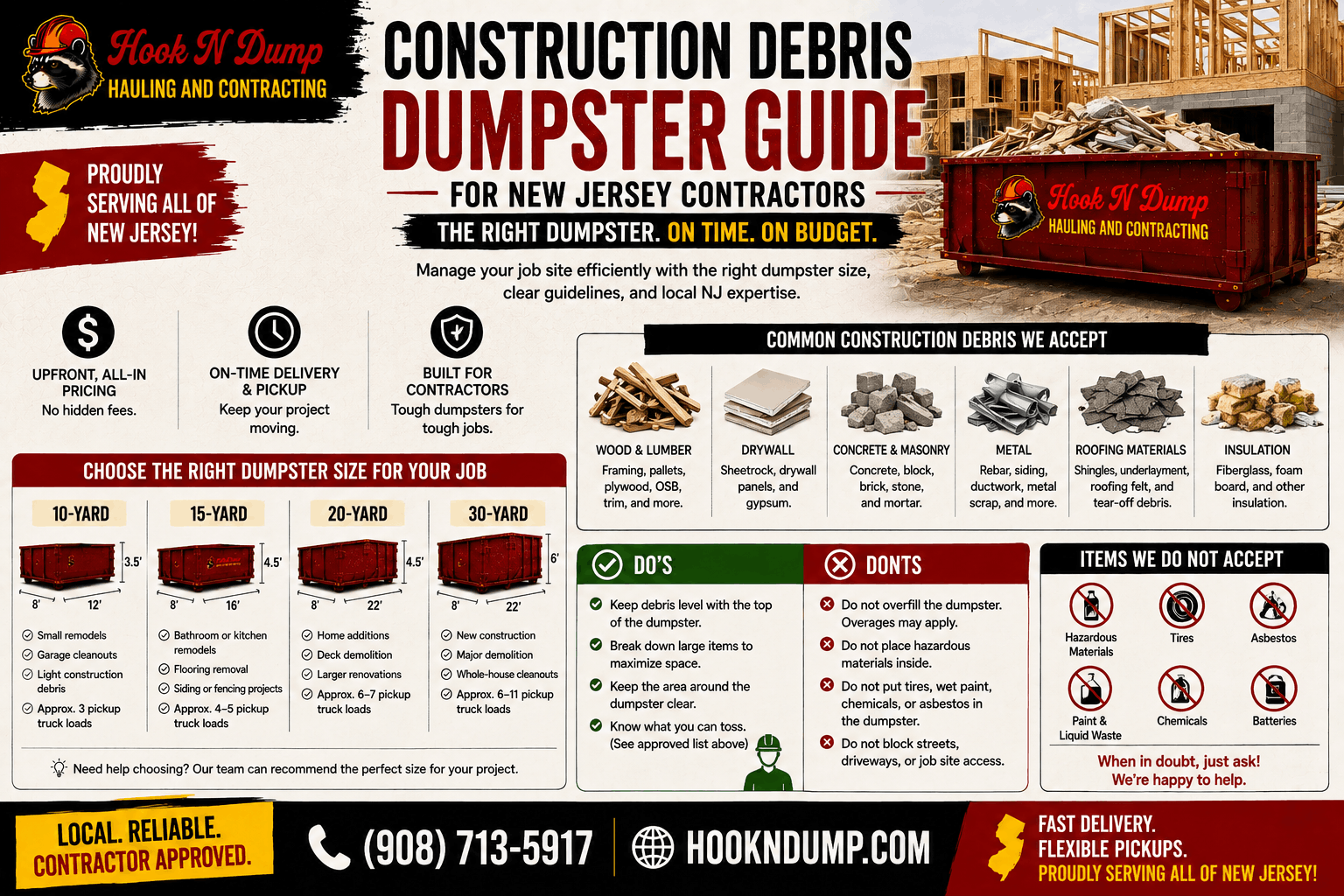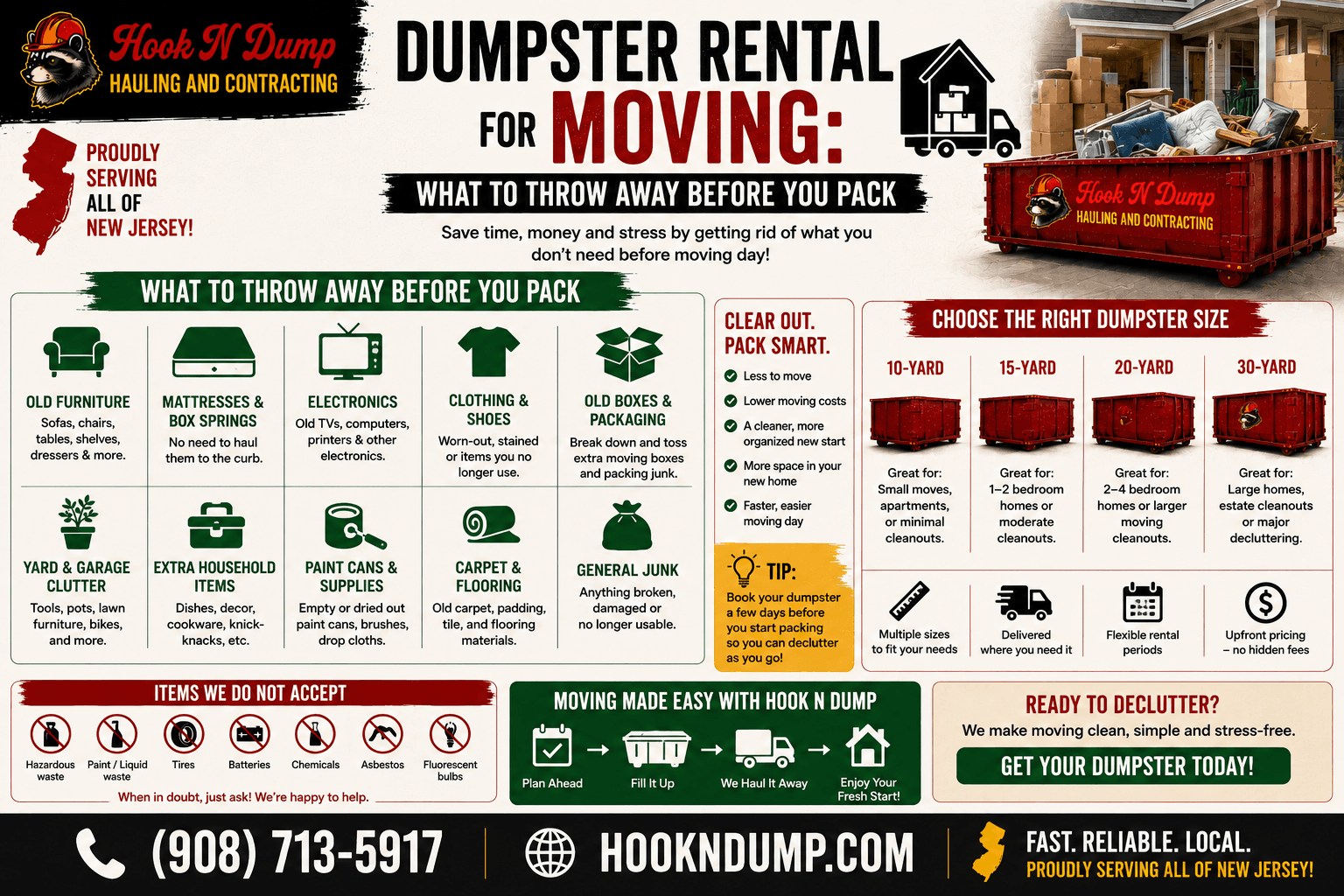
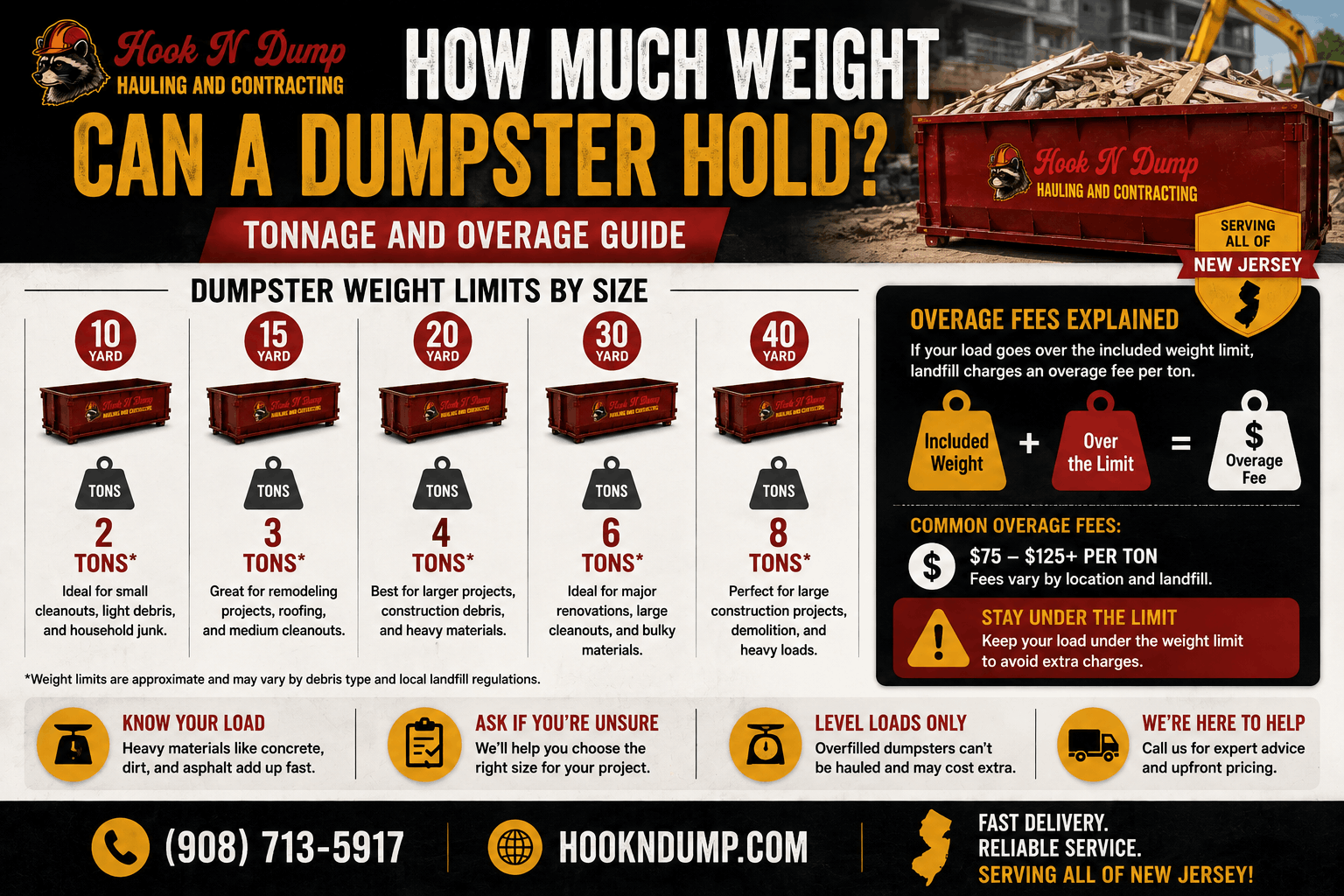
A dumpster can hold thousands of pounds of debris, but the amount included in your rental depends on the container size and rental terms.
Hook N Dump currently includes between 3,000 and 9,000 pounds with its standard 10, 15, 20, 30 and 40-yard dumpsters. That equals approximately 1.5 to 4.5 tons of debris.
Dumpster volume and dumpster weight are not the same measurement. A 30-yard container may have plenty of physical space remaining but still reach its weight allowance when it contains concrete, soil, roofing shingles, tile, plaster or other dense material.
Hook N Dump currently publishes these included allowances:
- 10-yard dumpster: 3,000 pounds
- 15-yard dumpster: 4,000 pounds
- 20-yard dumpster: 5,000 pounds
- 30-yard dumpster: 7,000 pounds
- 40-yard dumpster: 9,000 pounds
The company also states that heavy debris may have added weight restrictions and material-specific pricing.
Quick answer: Hook N Dump’s standard dumpsters currently include between 1.5 and 4.5 tons. The included weight is a pricing allowance, not permission to fill every container to the top with dense debris. Contact Hook N Dump before loading concrete, dirt, brick, asphalt, tile, plaster or large amounts of roofing material.
Hook N Dump Dumpster Weight Limits
| Dumpster Size | Included Weight | Included Tonnage | Current Starting Price | Common Uses |
|---|---|---|---|---|
| 10-yard | 3,000 lbs. | 1.5 tons | $475 | Small cleanouts and yard debris |
| 15-yard | 4,000 lbs. | 2 tons | $550 | Garage, attic and small renovation projects |
| 20-yard | 5,000 lbs. | 2.5 tons | $625 | Full-house cleanouts and remodeling |
| 30-yard | 7,000 lbs. | 3.5 tons | $725 | Estate cleanouts and construction |
| 40-yard | 9,000 lbs. | 4.5 tons | $875 | Major construction and large property cleanouts |
Hook N Dump’s public pricing currently includes 3, 7 and 10-day rental choices and lists additional rental time at $25 per day. Prices and weight allowances should be confirmed for the delivery address, debris type and rental dates. (Hook & DUMP)
One ton equals 2,000 pounds, so the conversion is:
3,000 lbs. ÷ 2,000 = 1.5 tons
4,000 lbs. ÷ 2,000 = 2 tons
5,000 lbs. ÷ 2,000 = 2.5 tons
7,000 lbs. ÷ 2,000 = 3.5 tons
9,000 lbs. ÷ 2,000 = 4.5 tons
What Does an Included Weight Allowance Mean?
The included weight allowance is the amount of debris covered by the base rental price.
For example, Hook N Dump’s 20-yard dumpster currently includes 5,000 pounds. If the final debris weight remains at or below 5,000 pounds and the customer follows the other rental terms, there should not be a weight-overage charge.
If the final debris weight exceeds 5,000 pounds, an added disposal charge may apply based on the extra weight and the rate stated in the rental agreement.
The allowance usually covers the debris, not the empty dumpster itself.
The roll-off container has its own weight, but that empty-container weight is deducted when calculating the net debris weight.
Included Weight vs. Maximum Safe Weight
These two terms should not be treated as interchangeable.
Included weight
The included weight is the amount covered by the quoted rental price.
For example:
- A 20-yard dumpster includes 5,000 pounds.
- A 30-yard dumpster includes 7,000 pounds.
Maximum approved load
The maximum approved load depends on:
- Dumpster construction
- Roll-off truck capacity
- Material type
- Weight distribution
- Road conditions
- Disposal facility
- Hauling requirements
- Container size
- Jobsite access
The maximum approved load may differ from the included billing allowance. Customers should never guess the maximum by looking at the container size.
A dumpster that has not reached the top can still be too heavy to move safely.
Hook N Dump states that concrete, brick, soil and other heavy materials may require special pricing and weight restrictions.
How Is Dumpster Weight Calculated?
The debris is commonly weighed using a truck scale at the disposal or recycling facility.
The calculation uses:
Loaded weight − Empty weight = Net debris weight
The loaded truck and container represent the gross weight. The empty truck and container represent the tare weight. The difference is the net load.
NIST describes gross weight as the combined load and tare, with the net amount found by accounting for the tare weight. It also describes weigh-in and weigh-out systems where the loaded and empty vehicle weights are compared.
New Jersey’s Solid Waste Origin and Disposal Form requires weighmasters to record vehicle weights and the relevant scale-ticket number for loads received at solid-waste facilities.
Example weight calculation
Assume the scale records:
Loaded truck and dumpster: 31,400 lbs.
Empty truck and dumpster: 26,000 lbs.
The net debris weight would be:
31,400 − 26,000 = 5,400 lbs.
If the rental includes 5,000 pounds, the overage would be:
5,400 − 5,000 = 400 lbs.
The customer may then be charged for 400 pounds of added disposal weight under the company’s billing terms.
Is an Overage Charged by the Pound or Ton?
Rental companies may calculate overages using:
- Pounds
- Partial tons
- Full-ton increments
- Rounded weight brackets
- Material-specific disposal rates
Ask these questions before ordering:
- What is the included weight?
- What is the price per additional ton?
- Are partial tons billed proportionally?
- Is the weight rounded?
- Is there a minimum overage charge?
- Can I receive the recorded final weight?
- Does heavy debris use another pricing method?
- Are taxes or facility fees added to the overage?
Do not assume that every company uses the same calculation.
Volume and Weight Are Different
Dumpster sizes such as 10, 20 or 30 yards refer to cubic volume.
A 20-yard dumpster can hold 20 cubic yards of material, but that does not tell you how much the material weighs.
Light, bulky debris
The following items may fill the available volume before reaching a high weight:
- Cardboard
- Clothing
- Household furniture
- Plastic items
- Light wood
- Packaging
- Empty cabinets
- Toys
- General household clutter
Dense debris
The following materials may reach the weight allowance while physical space remains:
- Concrete
- Dirt
- Soil
- Brick
- Asphalt
- Stone
- Ceramic tile
- Mortar
- Plaster
- Roofing shingles
- Wet drywall
- Water-damaged furniture
This is why the largest dumpster is not always the correct choice for a heavy-material project.
How Much Weight Can a 10-Yard Dumpster Hold?
Hook N Dump’s 10-yard dumpster currently includes:
3,000 lbs. = 1.5 tons
The container is intended for small projects such as:
- Partial garage cleanouts
- Small room cleanouts
- Spring cleaning
- Limited yard debris
- Minor home updates
A 10-yard dumpster may also be used for certain dense materials when Hook N Dump approves the load and provides a loading limit.
Do not fill the container to the top with concrete, soil, brick or asphalt unless the company has specifically approved that setup.
The standard 10-yard rental is currently listed at $475.
How Much Weight Can a 15-Yard Dumpster Hold?
Hook N Dump’s 15-yard dumpster currently includes:
4,000 lbs. = 2 tons
Common uses include:
- Garage cleanouts
- Attic cleanouts
- Small home renovations
- Multi-room flooring removal
- Minor exterior work
The 15-yard container provides more volume than the 10-yard option, but the included weight rises by only 1,000 pounds.
This means customers should still watch dense materials. Tile, mortar, plaster and wet construction debris can use the allowance faster than boxes, furniture and wood.
The standard 15-yard price is currently listed at $550.
How Much Weight Can a 20-Yard Dumpster Hold?
Hook N Dump’s 20-yard dumpster currently includes:
5,000 lbs. = 2.5 tons
The company lists this size for:
- Full-house cleanouts
- Kitchen remodeling
- Bathroom remodeling
- Deck or patio demolition
- Asphalt roofing shingles
A 20-yard container can provide enough space for many medium residential projects, but material weight should be discussed before delivery.
Roofing shingles, tile, plaster and demolition debris may reach the allowance before the container appears full.
The current standard starting price is $625.
How Much Weight Can a 30-Yard Dumpster Hold?
Hook N Dump’s 30-yard dumpster currently includes:
7,000 lbs. = 3.5 tons
Common uses include:
- Estate cleanouts
- Commercial construction
- Large home additions
- Roofing projects
- Larger renovation jobs
A 30-yard dumpster offers a large amount of physical space, making it suitable for bulky debris.
It should not be completely filled with concrete, dirt, brick or asphalt unless Hook N Dump gives written loading instructions. Dense materials can create an overweight load long before the container reaches its volume capacity.
The standard starting price is currently $725.
How Much Weight Can a 40-Yard Dumpster Hold?
Hook N Dump’s 40-yard dumpster currently includes:
9,000 lbs. = 4.5 tons
The company lists it for:
- Major construction
- Whole-home demolition
- Commercial roofing
- Very large estate cleanouts
- High-volume residential and commercial projects
A 40-yard container provides the most physical capacity in Hook N Dump’s standard lineup.
However, it is designed primarily for high-volume material, not unrestricted loads of dense masonry or soil. Customers should not choose this size solely because they have more concrete or dirt.
The standard starting price is currently $875.
Materials Most Likely to Cause an Overage
Concrete
Concrete becomes extremely heavy before it fills much container space.
Hook N Dump should approve:
- Dumpster size
- Slab dimensions
- Concrete thickness
- Reinforcement
- Loading height
- Whether the load must remain concrete-only
Dirt and soil
Soil weight can change based on:
- Moisture
- Clay content
- Rocks
- Sod
- Roots
- Attached debris
Unknown or potentially contaminated soil requires another level of review and should not be placed into a standard rental without approval.
Brick and block
Brick, concrete block, pavers and masonry can produce a dense load.
Ask whether the material can be mixed with concrete or must remain separate.
Asphalt
Pavement asphalt and roofing shingles are different waste streams.
Tell Hook N Dump whether the project involves:
- Driveway asphalt
- Asphalt millings
- Roofing shingles
- Attached soil or gravel
- Multiple roofing layers
Roofing shingles
Roofing shingles can reach the weight allowance quickly, especially when:
- Several layers are removed
- Underlayment is included
- Plywood is removed
- Debris becomes wet
- Flashing and other materials are mixed in
Provide the roof square count and number of layers before ordering.
Tile and mortar
Ceramic tile, stone tile, mortar beds and cement board can turn a bathroom or flooring renovation into a heavy load.
Plaster
Plaster is generally denser than modern drywall. Older homes with several layers of plaster and lath may produce more weight than expected.
Wet debris
Carpet, furniture, drywall, insulation, wood and yard waste can absorb moisture.
When practical, keep absorbent debris protected from rain and arrange pickup soon after loading.
Materials That Usually Reach Volume Before Weight
These materials are more likely to consume container space first:
- Couches
- Chairs
- Clothing
- Cardboard
- Toys
- Plastic storage bins
- Light cabinets
- Shelving
- Empty boxes
- Packaging
- Light household junk
A home cleanout containing mostly these items may require a larger container because of volume, even when the debris remains below the included weight.
How to Estimate Your Dumpster Weight
An exact weight is difficult to predict without a scale, but a useful estimate can still reduce the chance of an overage.
Step 1: Identify every material
Create separate categories for:
- Household junk
- Furniture
- Wood
- Drywall
- Flooring
- Roofing shingles
- Tile
- Concrete
- Brick
- Soil
- Asphalt
- Yard debris
Do not describe the load only as “construction debris.” The material breakdown matters.
Step 2: Measure dense materials
For slabs and paved areas, record:
- Length
- Width
- Thickness
- Number of sections
For soil, record:
- Excavation area
- Average depth
- Moisture condition
- Attached rocks, roots or sod
For roofing, record:
- Roof squares
- Number of layers
- Plywood removal
- Other material included
Step 3: Take project photographs
Photograph:
- The full debris area
- Material thickness
- Existing structure
- Debris piles
- Heavy items
- Container placement area
Hook N Dump may use the photos and measurements to suggest an appropriate container and loading plan.
Step 4: Separate heavy and light materials
A clean load of concrete may follow a different price and disposal route from mixed household and construction debris.
Ask whether you need:
- One heavy-material container
- One mixed-debris container
- Separate pickups
- Material-specific loading limits
Step 5: Allow room for unexpected debris
Renovation and cleanout projects can uncover:
- Extra flooring layers
- Plaster
- Mortar
- Hidden masonry
- Water-damaged material
- Additional roofing layers
- Soil beneath a slab
Tell Hook N Dump when the full amount cannot be seen before work starts.
How to Avoid Dumpster Weight Overage Fees
1. Disclose all materials before ordering
Give Hook N Dump a complete debris list.
Mention even a small amount of:
- Concrete
- Soil
- Brick
- Asphalt
- Roofing shingles
- Tile
- Plaster
- Stone
- Wet debris
2. Choose the dumpster by material and project
Do not choose only by starting price or container volume.
A 10-yard container may be safer for an approved dense load, while a 20 or 30-yard dumpster may be better for bulky household material.
3. Keep clean loads separate
Do not add furniture, garbage or plastic bags to a concrete-only or soil-only container without permission.
Mixing materials may change the disposal route and price.
4. Follow the heavy-material fill line
Hook N Dump may instruct you to stop well below the top edge.
Stop loading at the assigned level even when space remains.
5. Keep prohibited items out
Restricted items can lead to special handling, pickup delays or added fees.
Hook N Dump lists hazardous waste, chemicals, paint, asbestos, propane tanks, medical waste and flammable materials among items that are generally prohibited.
6. Prevent other people from using the dumpster
When a container is accessible from a street or shared property, neighbors or passersby may add material without permission.
Consider:
- Placing the dumpster on private property
- Covering it when permitted
- Posting a no-dumping notice
- Checking the container daily
- Keeping the placement area monitored
7. Keep absorbent material dry when practical
Load carpet, drywall, furniture and cardboard close to the pickup date when rain is expected.
Do not climb into the dumpster to install or remove a cover.
8. Stop loading when the dumpster appears close to the limit
Contact Hook N Dump rather than guessing.
The company may recommend:
- Another container
- An early pickup
- An empty-and-return service
- Removing a material type
- Moving the remaining debris to another approved load
9. Confirm the overage rate in writing
Ask the quote to show:
- Included pounds or tons
- Overage rate
- Billing increments
- Heavy-material terms
- Scale-weight procedure
- Special-item fees
- Failed-pickup terms
Hook N Dump states that rental costs, weight allowances and added fees are explained before delivery.
10. Ask about final weight documentation
When an overage applies, ask whether the company can provide:
- Gross weight
- Tare weight
- Net debris weight
- Scale-ticket number
- Included allowance
- Overage calculation
New Jersey disposal facilities use weighmasters and scale-ticket records for incoming loads.
Overweight vs. Overfilled Dumpster
These are separate problems.
Overweight dumpster
An overweight dumpster contains more debris weight than the approved or included limit.
It may look partly empty.
Overfilled dumpster
An overfilled dumpster contains material:
- Above the top walls
- Outside the container
- Hanging over the sides
- Blocking the rear door
- Preventing safe covering or transport
It may still be below its weight allowance.
A dumpster can be both
A container filled above the walls with heavy roofing shingles could be both overfilled and overweight.
Keep debris below the approved fill line and within the weight terms.
What Happens If a Dumpster Is Too Heavy?
An overweight container may lead to:
- Weight-overage charges
- Delayed pickup
- A request to remove material
- An unsuccessful service attempt
- Another container
- Added hauling costs
- Rescheduling
- A change in disposal routing
Do not attempt to unload an unstable dumpster without proper equipment and safe working conditions.
Contact Hook N Dump when you believe the load may exceed the approved weight.
Project Weight Planning Examples
Garage cleanout
A garage cleanout containing cardboard, household clutter and light furniture may reach volume before weight.
Dense items such as tile, landscaping stone, auto parts or construction material can change the estimate.
Possible starting sizes: 10 or 15 yards.
Basement cleanout
A basement may contain:
- Furniture
- Boxes
- Exercise equipment
- Cabinets
- Old flooring
- Plaster
- Appliances
The container size depends on both bulky items and dense renovation debris.
Possible starting sizes: 15 or 20 yards.
Kitchen renovation
Cabinets and drywall may use volume, while tile, stone countertops, plaster and mortar increase weight.
Possible starting size: 20 yards, subject to the material list.
Bathroom renovation
A small bathroom can generate a heavy load when it contains:
- Ceramic tile
- Mortar bed
- Cement board
- Cast-iron fixtures
- Plaster
Do not estimate the project based only on room size.
Roofing project
Provide the roof square count, number of layers and whether plywood will be removed.
Possible starting sizes: 20 or 30 yards, based on the project and approved weight plan.
Concrete patio removal
The container may need a low fill line or concrete-only terms.
Do not order based only on the physical volume of the broken concrete.
Estate cleanout
Furniture, clothing and boxes usually consume volume first.
A 30 or 40-yard dumpster may fit the physical debris, but special items such as appliances, tires and electronics should be identified before loading.
Questions to Ask Before Renting
Ask the dumpster company:
- How many pounds or tons are included?
- What is the overage rate?
- Are partial tons prorated?
- Does the debris need to remain separated?
- What is the fill limit for heavy materials?
- Can I mix household and construction debris?
- Are scale-ticket details available?
- What happens if the container is too heavy to move?
- Are mattresses, tires or appliances charged separately?
- Does rainwater count toward the recorded weight?
- Is the price based on my exact address?
- Are delivery and pickup included?
- Can I request an early pickup?
- Is an empty-and-return service available?
FREQUENTLY ASKED QUESTIONS
How much weight can a dumpster hold?
Hook N Dump’s standard dumpsters currently include between 3,000 and 9,000 pounds, depending on the container size. The approved maximum may depend on the material and hauling conditions.
How many tons can a 10-yard dumpster hold?
Hook N Dump’s 10-yard dumpster currently includes 3,000 pounds, which equals 1.5 tons.
How many tons can a 15-yard dumpster hold?
The standard 15-yard Hook N Dump rental currently includes 4,000 pounds, which equals 2 tons.
How many tons can a 20-yard dumpster hold?
Hook N Dump currently includes 5,000 pounds, or 2.5 tons, with its standard 20-yard dumpster.
How many tons can a 30-yard dumpster hold?
The standard 30-yard rental currently includes 7,000 pounds, equal to 3.5 tons.
How many tons can a 40-yard dumpster hold?
Hook N Dump currently includes 9,000 pounds, or 4.5 tons, with its standard 40-yard container.
What is a dumpster tonnage allowance?
A tonnage allowance is the debris weight included in the rental price. Added charges may apply when the final scale weight exceeds the allowance.
How is dumpster debris weighed?
The loaded truck and container are weighed, and the empty truck and container weight is deducted. The difference is the net debris weight.
What happens if I exceed the included weight?
A weight-overage charge may apply based on the extra pounds or tons and the rate in the rental agreement.
Can a dumpster be overweight without being full?
Yes. Concrete, soil, brick, asphalt, tile and other dense materials may reach the weight limit while physical space remains.
Can I fill a 40-yard dumpster with concrete?
Do not do so without written approval. A large container can become too heavy when filled with concrete, dirt or masonry.
Does wet debris weigh more?
Yes. Water absorbed by carpet, furniture, cardboard, drywall, wood and yard debris adds to the load’s measured weight.
Is dumpster weight the same as dumpster size?
No. Dumpster size is measured in cubic yards and describes volume. The weight allowance is measured in pounds or tons.
Can I receive a copy of the scale ticket?
Ask the rental company whether gross, tare, net weight or scale-ticket information is available when an overage is billed.
Get the Right Weight Allowance for Your Project
The safest way to avoid an overage is to describe the full project before ordering.
Provide Hook N Dump with:
- Delivery address
- Project type
- Debris list
- Dense-material amount
- Roof square count where applicable
- Slab or excavation measurements
- Project photographs
- Preferred dumpster size
- Rental dates
- Placement location
Hook N Dump currently provides five dumpster sizes with included weight allowances from 3,000 to 9,000 pounds across North and Central New Jersey. Heavy debris may receive separate loading and pricing terms.
Call (973) 477-6805 or request a quote online.
Reviewed by Hook N Dump
Prices, included weights, overage rates and material restrictions may change. Confirm the current written terms before loading your dumpster.
Not Sure How Much Your Debris Will Weigh?
Send Hook N Dump your project details and photographs. The team will help you select the right container and confirm the included weight before delivery.