A roll-off dumpster quote usually covers the container, delivery, pickup, an agreed rental period, and disposal up to a stated weight allowance. Added charges may apply when the customer exceeds those terms or when the driver cannot safely complete a scheduled service.
Common causes include loading too much weight, keeping the container longer than booked, placing restricted materials inside it, blocking access on pickup day, or ordering a second haul because the first dumpster was too small.
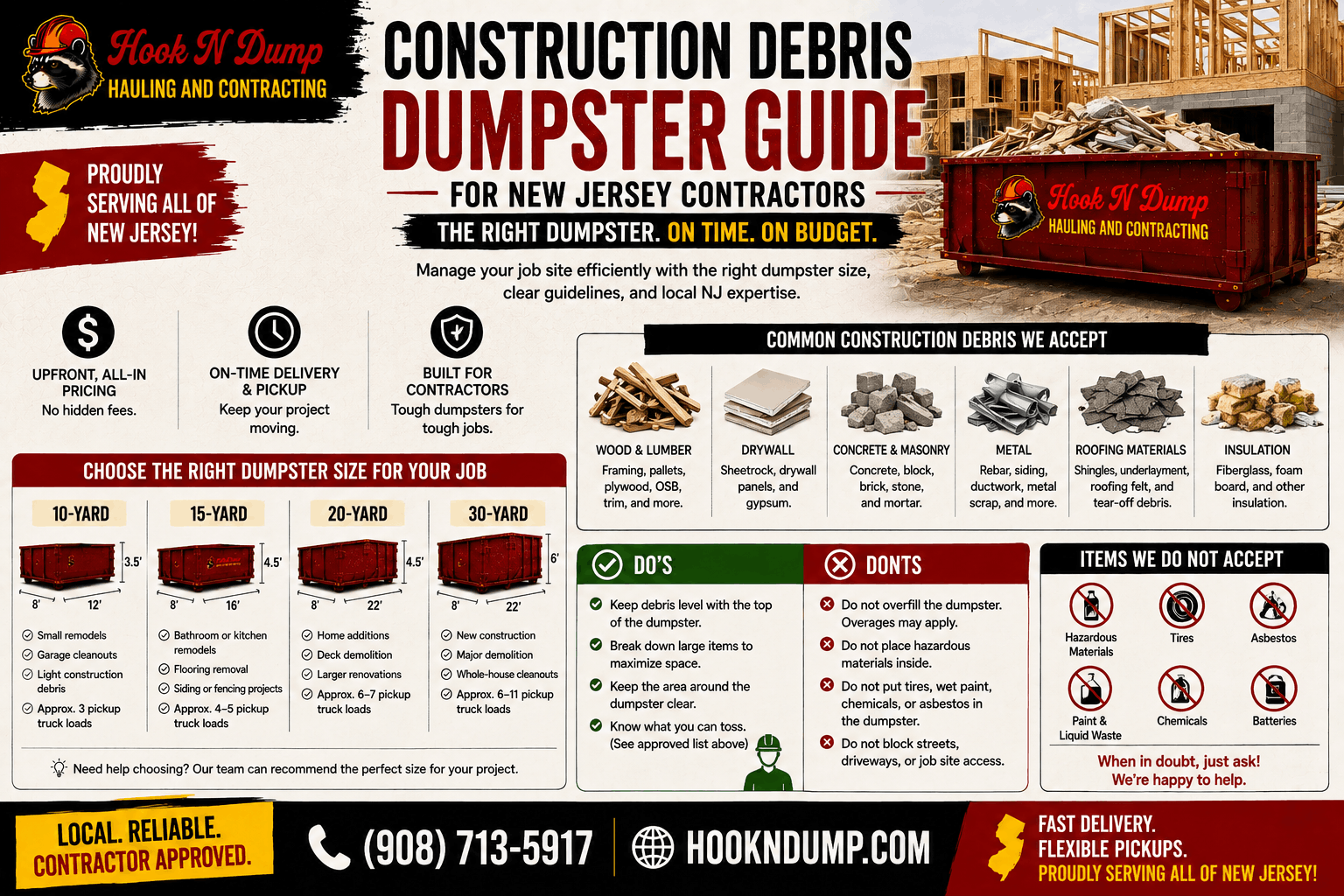
Hook N Dump currently publishes five dumpster sizes with included weight allowances ranging from 3,000 to 9,000 pounds. Its website also lists 3, 7, and 10-day rental choices and an additional-day rate of $25 per day.
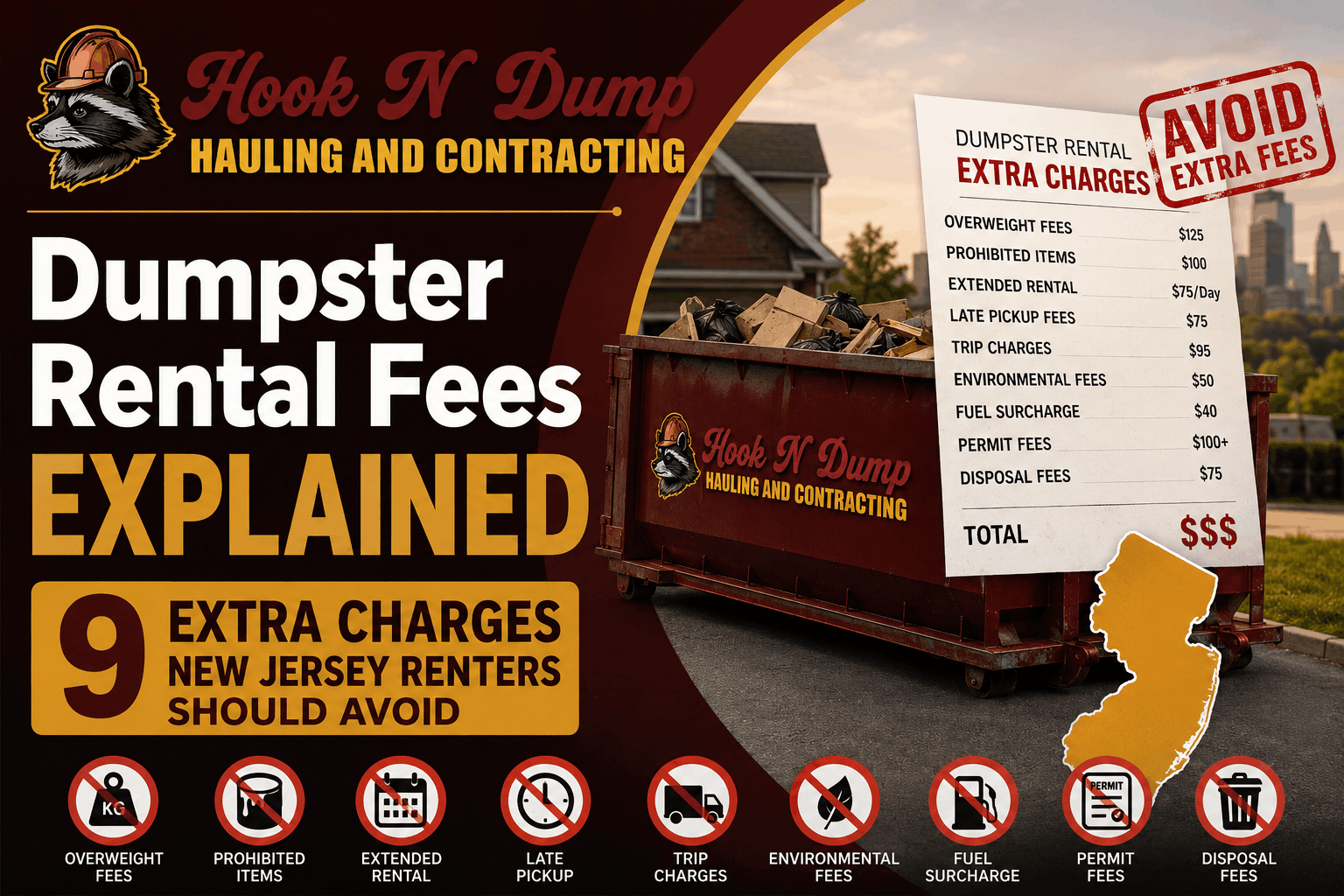
This guide explains nine types of dumpster rental fees New Jersey customers may encounter and how to reduce the chance of paying more than the original quote.
Pricing note: Hook N Dump publicly lists its dumpster prices, included weights, and $25 additional-day rate. Exact charges for overweight loads, failed service attempts, restricted items, cancellations, and unusual delivery conditions should be confirmed in the rental agreement before ordering.
Quick Guide to Common Dumpster Rental Fees
| Possible Charge | What May Cause It | How to Reduce the Risk |
|---|---|---|
| Weight overage | Debris exceeds the included weight. | Estimate heavy materials before ordering. |
| Overfill charge | Debris extends above the container walls. | Keep the load level and below the top. |
| Additional days | Dumpster remains longer than booked. | Schedule work before delivery. |
| Special-item disposal | Mattresses, tires, TVs or Freon appliances. | Disclose every special item in advance. |
| Prohibited-item handling | Paint, chemicals, asbestos or other restricted waste. | Separate restricted materials. |
| Trip or service-attempt fee | Driver cannot deliver or collect the dumpster. | Keep the access route clear. |
| Cancellation or rescheduling | Late schedule changes after dispatch planning. | Give notice as early as possible. |
| Second haul or extra container | Debris does not fit in the first dumpster. | Select the correct size initially. |
| Distance-based delivery | Property is farther from the normal service area. | Provide the full address before accepting the quote. |
The names and amounts used for these charges differ between rental companies. Your written quote and rental terms control the final price.
1. Weight Overage Charges
What Is a Dumpster Weight Overage?
Each Hook N Dump container includes a stated amount of disposal weight:
| Dumpster Size | Included Weight |
|---|---|
| 10-yard dumpster | 3,000 lbs. |
| 15-yard dumpster | 4,000 lbs. |
| 20-yard dumpster | 5,000 lbs. |
| 30-yard dumpster | 7,000 lbs. |
| 40-yard dumpster | 9,000 lbs. |
These are the current allowances displayed on the Hook N Dump website.
An overage charge may apply when the net weight of the debris exceeds the amount included in the rental price. The loaded dumpster is generally weighed during disposal, and the difference between the loaded and empty container weights determines the amount of debris.
One ton equals 2,000 pounds. Therefore:
- A 3,000-pound allowance equals 1.5 tons.
- A 4,000-pound allowance equals 2 tons.
- A 5,000-pound allowance equals 2.5 tons.
- A 7,000-pound allowance equals 3.5 tons.
- A 9,000-pound allowance equals 4.5 tons.
Materials That Can Cause Weight Overage
Dense debris can exceed the allowance before the dumpster appears full.
Watch for:
- Concrete
- Brick
- Block
- Asphalt
- Dirt
- Soil
- Roofing shingles
- Ceramic tile
- Plaster
- Stone
- Wet construction debris
- Tree stumps
A New Jersey competitor warns customers that concrete, dirt, and asphalt must be kept below the container’s top rail because these materials can create unsafe overweight loads. The same company also notes that water absorbed by debris counts toward the disposal weight.
How to Avoid a Weight Overage
Before ordering:
- Tell Hook N Dump exactly what material you are removing.
- Estimate the approximate volume of each material.
- Disclose roofing layers and roof square count.
- Ask whether heavy debris requires a smaller container.
- Keep concrete, soil, brick, and household waste separate unless mixing is approved.
- Cover absorbent debris before heavy rain or snow when permitted.
- Stop loading when you reach the heavy-material fill level provided by the company.
A large dumpster is not always the correct choice for heavy debris. A partly filled smaller container may be safer than a large container filled with concrete or soil.
2. Overfill and Unsafe-Load Charges
Weight and volume are separate limits.
A dumpster can remain within its weight allowance but still be unsafe because furniture, lumber, bags, or construction debris extends above the side walls. It can also be below the top rail but too heavy to lift legally or safely.
Rental providers generally require debris to remain below the container’s marked fill line. An overfilled container may result in a failed pickup, a trip charge, unloading work, or the need for another container.
Common Overfill Problems
- Furniture stacked above the side walls
- Boards extending over the front or rear
- Bags tied to the outside of the container
- Debris built into makeshift side walls
- A rear door that cannot close
- Loose material that cannot be covered safely
- Concrete or soil loaded beyond the approved height
How to Avoid an Overfill Fee
Load large and flat items first. Break down furniture, cabinets, cardboard, and shelving where practical.
Distribute the material across the floor instead of creating one tall pile. Keep all debris:
- Below the top edge
- Inside the container walls
- Away from the exterior hooks and rollers
- Clear of the rear door
- Evenly distributed
When the dumpster becomes full earlier than expected, stop loading and contact Hook N Dump. Removing excess debris before the scheduled pickup is usually easier than dealing with a failed collection.
3. Additional Rental-Day Charges
Your dumpster price covers a selected rental period. Keeping the container beyond that period may create an extension charge.
Hook N Dump currently provides 3, 7, and 10-day selections and publishes an additional rental rate of $25 per day.
Example
Suppose you reserve a dumpster for seven days but keep it for three additional days.
Based on the currently published additional-day rate:
3 additional days × $25 = $75
This example does not include any other possible charges.
How to Avoid Additional-Day Fees
Plan the work before delivery:
- Complete demolition or sorting preparations first.
- Schedule contractors before reserving the dumpster.
- Avoid delivery several days before work begins.
- Confirm when the rental period starts.
- Confirm whether the final day is included.
- Request pickup as soon as the project is complete.
- Contact Hook N Dump before the end date when more time is needed.
Do not assume that requesting pickup on the final day means the container can remain indefinitely until a truck arrives. Ask how pickup requests and rental-day calculations are handled.
4. Special-Item Disposal Fees
Some items require separate handling, recycling, refrigerant removal, or added processing by the receiving facility.
Hook N Dump’s current location and regional pages state that the following may require additional disposal fees:
- Mattresses
- Box springs
- Tires
- Televisions
- Monitors
- Appliances containing Freon
- Certain heavy materials
Why Special Items May Cost More
These items may not follow the same disposal route as ordinary household junk or construction debris.
For example:
- Mattresses and box springs can require separate processing.
- Tires may need an approved recycling route.
- Televisions and monitors may be handled through electronics recycling.
- Refrigerators, freezers, and air conditioners may require refrigerant recovery.
- Heavy materials may need a clean load or another disposal facility.
How to Avoid an Unexpected Item Fee
Before placing the order, send the company a complete list that includes:
- Number of mattresses and box springs
- Number and type of tires
- Televisions and monitor sizes
- Refrigerators, freezers, or air conditioners
- Concrete, soil, brick, asphalt, or stone
- Other items that may need separate handling
Ask for the added cost in writing. Do not hide special items underneath ordinary debris.
5. Prohibited-Item and Contamination Charges
Some materials are restricted because they can create safety, environmental, transportation, or disposal problems.
Hook N Dump currently lists materials such as hazardous waste, chemicals, paint, solvents, asbestos, propane tanks, medical waste, fuel, flammable materials, and certain electronics as prohibited or restricted.
A prohibited item may need to be removed before pickup. In some cases, a receiving facility may reject the load or require separate handling.
Items to Keep Out Unless Approved
- Liquid paint
- Paint thinner
- Solvents
- Gasoline
- Motor oil
- Propane cylinders
- Asbestos-containing debris
- Medical waste
- Loose needles
- Batteries
- Pesticides
- Pool chemicals
- Flammable liquids
- Unmarked chemical containers
What Is Load Contamination?
Load contamination occurs when a waste stream contains material that does not belong in it.
Examples include:
- Household trash mixed into a concrete-only load
- Paint cans buried under construction debris
- Soil mixed with chemicals or petroleum
- Tires hidden inside furniture
- Electronics covered by bags
- Food waste mixed into a clean recycling load
How to Avoid Prohibited-Item Charges
Create separate areas before cleanup begins:
- Standard dumpster material
- Special-fee items
- Electronics
- Paint and chemicals
- Batteries
- Refrigerant appliances
- Heavy debris
- Unknown or suspected hazardous material
Contact Hook N Dump whenever you are uncertain. A short call before loading can prevent removal work, pickup delays, and added disposal costs.
6. Trip or Failed-Service Charges
A trip or service-attempt charge may apply when a truck arrives but cannot safely deliver, exchange, or remove the container.
Common causes include:
- Vehicles blocking the dumpster
- Locked gates
- Construction equipment in the access path
- Snow piles
- Mud or unstable ground
- Low branches
- Low utility wires
- Debris extending above the top
- A dumpster that is too heavy to lift
- A permit problem
- No legal street space
- A customer requesting service after the truck has arrived
Dumpster companies use different names for this charge, including trip fee, dry-run fee, service-attempt fee, or unsuccessful-haul fee. Published industry examples show that inaccessible or unsafe service conditions can lead to an added trip charge.
How to Avoid a Trip Fee
The day before delivery or pickup:
- Move all vehicles.
- Unlock gates.
- Remove temporary fences.
- Clear snow and ice.
- Confirm that the ground remains firm.
- Trim or report low branches.
- Keep the truck’s approach clear.
- Check the load height.
- Make sure the rear dumpster door is secured.
- Confirm that any required street permit remains active.
- Tell tenants, workers, and neighbors not to block the area.
Take a photograph of the clear access path before the scheduled service. It can help your team confirm that the property is ready.
7. Late Cancellation and Rescheduling Charges
Dumpster routes are planned around truck capacity, container inventory, distance, disposal facilities, and customer appointments.
A late cancellation or delivery-date change may result in an added charge, particularly when the truck has already been scheduled or dispatched. A New Jersey rental provider currently states that cancellations made within 24 hours or while the truck is en route may result in a cancellation fee. That is a market example and not Hook N Dump’s published policy.
Situations That Can Cause a Late Change
- A contractor postpones work.
- The permit has not been approved.
- The driveway is blocked.
- The property owner changes the placement location.
- Weather delays demolition.
- The wrong dumpster size was ordered.
- HOA or landlord approval was not obtained.
- Payment or access information is incomplete.
How to Avoid a Cancellation Charge
Before booking:
- Confirm the project start date.
- Confirm contractor availability.
- Obtain the permit when street placement is planned.
- Obtain landlord or HOA approval.
- Confirm the dumpster size.
- Check the access route.
- Review the cancellation deadline.
- Contact Hook N Dump immediately when plans change.
Ask whether moving the delivery date is treated differently from canceling the order.
8. Second Dumpster, Extra Haul or Empty-and-Return Charges
Choosing a container that is too small can lead to another rental or an extra pickup and return.
Hook N Dump currently offers:
When a Second Dumpster May Be Needed
- The first container is full before the project is finished.
- The project contains more debris than estimated.
- Heavy and light materials must be separated.
- An unsafe overfill must be removed.
- Clean concrete cannot be mixed with household junk.
- Renovation work expands after walls or flooring are opened.
- Several roofing layers are discovered.
- An estate cleanout contains more furniture than expected.
How to Select the Right Size
Consider both volume and weight.
A 20-yard container may provide enough physical room for a renovation, but a smaller heavy-debris container may be required for concrete. A 30 or 40-yard dumpster may be better for bulky furniture and light construction material, provided the load remains within its included weight.
Tell Hook N Dump:
- Property size
- Number of rooms
- Project type
- Types of debris
- Approximate material volume
- Number of roofing layers
- Whether furniture or appliances are included
- Whether concrete, dirt, brick, or tile is present
Paying slightly more for the correct size can cost less than ordering a second container later.
9. Distance-Based Delivery Charges
Delivery costs can change based on travel distance, route availability, tolls, and the property’s location.
Hook N Dump’s Service Areas page states that delivery fees are calculated according to the distance between the customer’s location and its service area. The company says rental costs, weight allowances, and any added charges are explained before delivery.
How to Prevent a Delivery-Fee Surprise
Provide the complete address when requesting a quote, including:
- Street number
- Municipality
- ZIP code
- County
- Jobsite entrance
- Building or unit number
- Special access instructions
Do not request pricing using only “North Jersey” or a county name. Two properties in the same county may be very different distances from the dispatch point or disposal facility.
Ask whether the quote includes:
- Delivery
- Final pickup
- Fuel
- Tolls
- Disposal
- Included weight
- Rental period
- Taxes
- Distance surcharge, when applicable
What Should Be Included in a Dumpster Rental Quote?
Before paying, request a written quote showing:
- Dumpster size
- Base rental price
- Included rental period
- Included weight
- Delivery address
- Approved debris type
- Delivery charge
- Pickup charge
- Additional-day price
- Weight overage price
- Special-item charges
- Trip or failed-service charge
- Cancellation terms
- Tax
- Payment method
- Permit responsibility
Hook N Dump’s current public prices range from $475 for a 10-yard dumpster to $875 for a 40-yard dumpster. The website lists included weights from 3,000 to 9,000 pounds and additional days at $25 per day.
Your actual quote may vary by address, materials, selected dates, and requested services.
Flat-Rate vs. Variable Dumpster Pricing
A flat-rate quote generally combines several costs into one starting amount, such as:
- Container use
- Delivery
- Pickup
- Disposal up to an included weight
- A stated rental period
A variable-rate quote may separate some of those costs and calculate disposal after the dumpster is weighed.
Industry pricing guides note that even flat-rate rentals can include later charges when customers exceed the weight allowance, extend the rental, request extra service, or violate the rental terms. (dumpsters.com)
When comparing two quotes, do not look only at the starting price. Compare:
- Container size
- Internal dimensions
- Included days
- Included weight
- Price per additional day
- Price per additional ton
- Delivery area
- Allowed materials
- Special-item pricing
- Pickup terms
A lower starting rate with a small weight allowance can cost more after disposal than a higher quote with more weight included.
How Rain and Snow Can Affect Dumpster Weight
Rainwater and snow can add weight when they collect in the container or soak into carpet, furniture, drywall, wood, insulation, cardboard, and yard debris.
Disposal facilities weigh the loaded container rather than separating dry debris weight from absorbed water. Published New Jersey rental guidance warns that water weight can contribute to an overage. (Hometown Waste & Recycling Services Inc.)
Ways to Reduce Weather-Related Weight
- Schedule loading close to the pickup date.
- Keep absorbent materials indoors until loading.
- Close the dumpster door after loading.
- Use a tarp when the rental company allows it.
- Do not allow standing water to collect.
- Request pickup promptly after the project ends.
- Remove snow from around the container before collection.
Never climb into a dumpster to remove snow, adjust a tarp, or rearrange unstable debris.
Nine-Step Fee Prevention Checklist
Use this list before delivery:
- Select the correct dumpster size.
- Confirm the included weight.
- Disclose all heavy materials.
- Identify mattresses, tires, electronics, and refrigerant appliances.
- Remove prohibited waste from the project area.
- Keep debris below the top edge.
- Clear the truck’s access route.
- Schedule pickup before the rental expires.
- Read the written fee and cancellation terms.
FREQUENTLY ASKED QUESTIONS
What are the most common dumpster rental fees in New Jersey?
Common added charges include weight overages, additional rental days, special-item disposal, failed service attempts, overfilled containers, restricted materials, late cancellations, second hauls, and distance-based delivery.
How much does Hook N Dump charge for additional rental days?
Hook N Dump currently lists additional rental time at $25 per day for its dumpster sizes. Confirm the rate in your quote when ordering.
What happens if my dumpster is overweight?
The company may charge for weight above the included allowance. A severely overweight dumpster may also need to be partly unloaded before it can be transported safely.
Is an overfilled dumpster the same as an overweight dumpster?
No. An overfilled dumpster contains debris above its permitted volume or fill line. An overweight dumpster exceeds its allowed disposal weight. A load can violate one limit or both.
Can rain cause a dumpster weight charge?
Yes, it may. Water and snow can add weight directly or soak into debris. The final weight recorded during disposal can include that added moisture.
Do mattresses and tires cost extra?
Hook N Dump states that mattresses, box springs, tires, televisions, monitors, Freon-containing appliances, and certain heavy materials may require additional disposal fees. Confirm the cost before loading.
What causes a dumpster trip fee?
A trip fee may occur when the driver arrives but cannot safely deliver or collect the dumpster because of blocked access, unsafe loading, excessive weight, permit problems, or another site condition.
Can I avoid an extra-day charge by requesting pickup on the final day?
Pickup and billing rules differ by rental company. Ask whether the rental stops when pickup is requested or when the container is physically removed.
Is delivery always included in the advertised dumpster price?
Not always. Hook N Dump states that delivery pricing can depend on the distance to the property. Request a written quote for the complete service address.
How can I get an accurate dumpster quote?
Provide the complete address, project type, debris list, estimated volume, heavy-material amount, required dates, special items, and proposed placement location.
Request a Clear New Jersey Dumpster Rental Quote
Hook N Dump provides 10, 15, 20, 30, and 40-yard roll-off dumpsters for residential cleanouts, remodeling, roofing, construction, landscaping, estate cleanouts, and demolition projects throughout North and Central New Jersey.
Call (973) 477-6805 or request a quote online. Ask the team to confirm:
- Included rental days
- Included weight
- Approved materials
- Special-item costs
- Additional-day pricing
- Delivery pricing
- Placement requirements
- Pickup process
Reviewed by Hook N Dump
Rental rates, disposal costs, accepted materials, and fee policies can change. Review your current written quote and rental agreement before ordering.